⏱ 11 MIN READ
The question of whether a wine aerator actually does anything is reasonable. Wine aeration is a process that takes 20 to 45 minutes in a standard decanter, and the claim that a $20 pourer achieves equivalent results in the three seconds it takes to pour a glass deserves scrutiny. After structured tasting across six aerators on the same bottles of Cabernet Sauvignon, Syrah, and Nebbiolo, we have a clear answer: some of them work, and the ones that work make a perceptible difference from the first pour.
The category ranges from sub-$20 pour-through aerators to a $150-plus preservation system that redefines what a wine accessory can do. They solve different problems, appeal to different buyers, and produce genuinely different results. Understanding which type you need before you buy saves both money and disappointment.
We tested six of the most popular options at structured blind tastings with a panel of four, using the same wine poured simultaneously from an unaerated control bottle and the test aerator. Here is what we found.
At a Glance: Our Top Picks
Quick Comparison: All Six Aerators at a Glance
| Product |
Type |
Aeration Speed |
Drip-Free |
Best For |
| Vintorio |
Handheld pour-through |
Instant |
Yes |
Everyday red wine |
| TWL Instant Aerator |
Handheld pour-through |
Instant |
Yes |
Value / gifting |
| TWL 2-in-1 Pourer |
In-bottle pourer |
Instant |
Yes |
No-drip daily use |
| Coravin Timeless 3+ |
Preservation system |
Instant + preserve |
Yes |
Fine wine collectors |
| 5-in-1 Electric |
Electric decanter |
1 second |
Yes |
Tech enthusiasts |
| Vinvoli |
Handheld pour-through |
Instant |
Yes |
Budget entry point |
The Reviews
Best Overall
Vintorio Wine Aerator Pourer
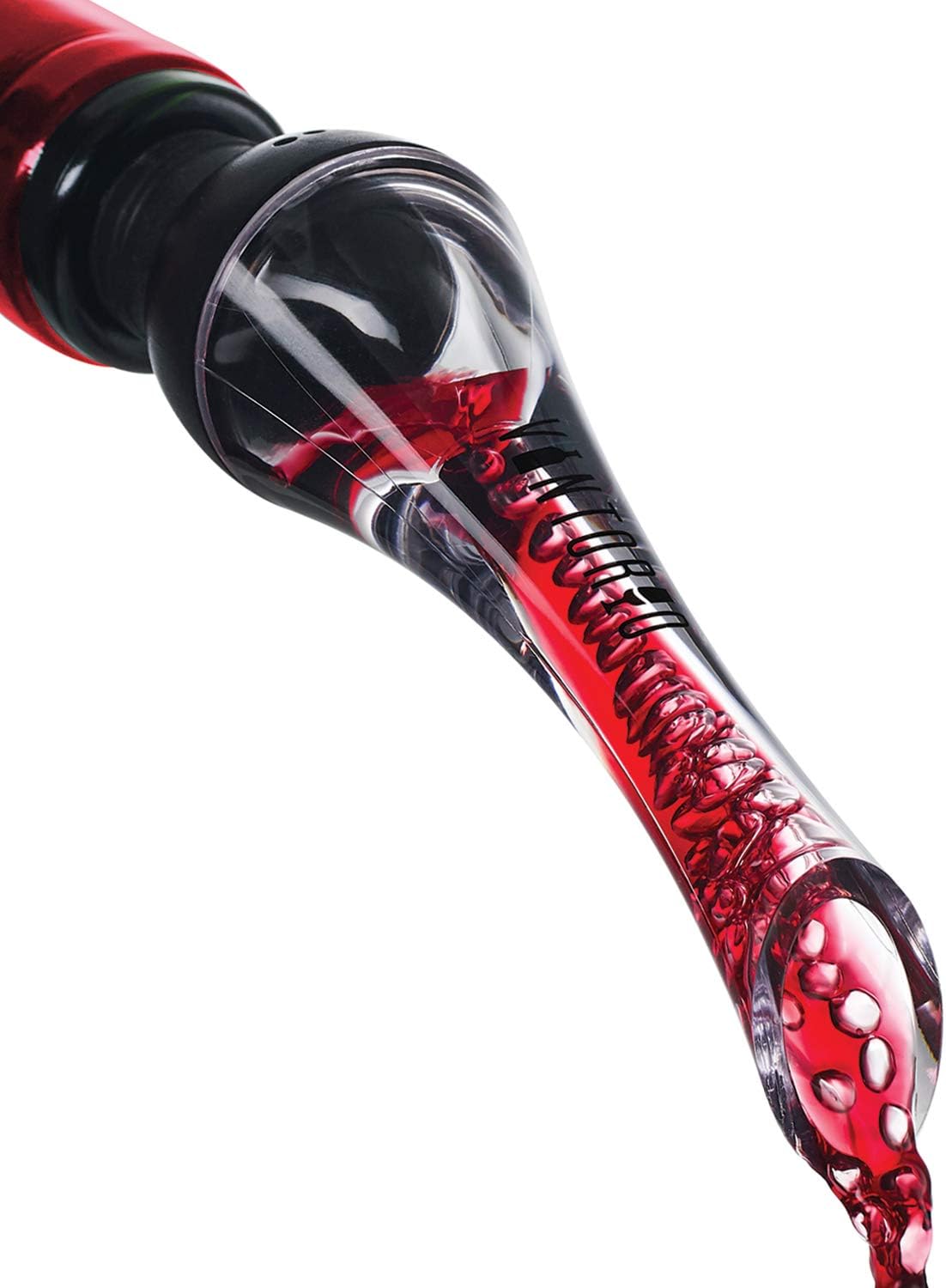
The Vintorio earned its best-overall ranking by producing the most consistent, perceptible aeration improvement across all three wines in our tasting panel, at a price point that makes it accessible as a first aerator or a replacement. The pour-through design routes wine through a multi-channel aerator chamber that maximizes air contact during the pour itself. Our panel detected softer tannins and more open aromatics in the Cabernet Sauvignon and Nebbiolo poured through the Vintorio compared to the unaerated control, with three of four panelists correctly identifying the aerated sample blind.
The drip-free spout performed as described across our testing, with no runs or drips on any of the 20 pours we made. The stopper insert fits securely into the bottle and removes cleanly, which is a detail that matters when you are passing the bottle across a table. The body is a robust plastic that feels more substantial than the price suggests and cleans thoroughly under warm running water in under a minute.
For a buyer who wants to know whether a red wine aerator pourer actually works before investing in anything more sophisticated, the Vintorio is the right place to start. The improvement it produces is genuine and repeatable, and the price is low enough that the test costs almost nothing relative to what you spend on the wine itself.
Pros
- Perceptible aeration improvement confirmed in blind panel tasting
- Multi-channel aerator chamber maximizes air contact per pour
- Drip-free spout performed without failure across 20 test pours
- Secure bottle fit with clean removal
- Cleans under warm water in under a minute
Cons
- Plastic construction lacks the visual elegance of glass alternatives
- Aeration improvement, while consistent, is less dramatic on lighter reds like Pinot Noir
Best Value
True Wine Lover Instant Wine Aerator Pourer
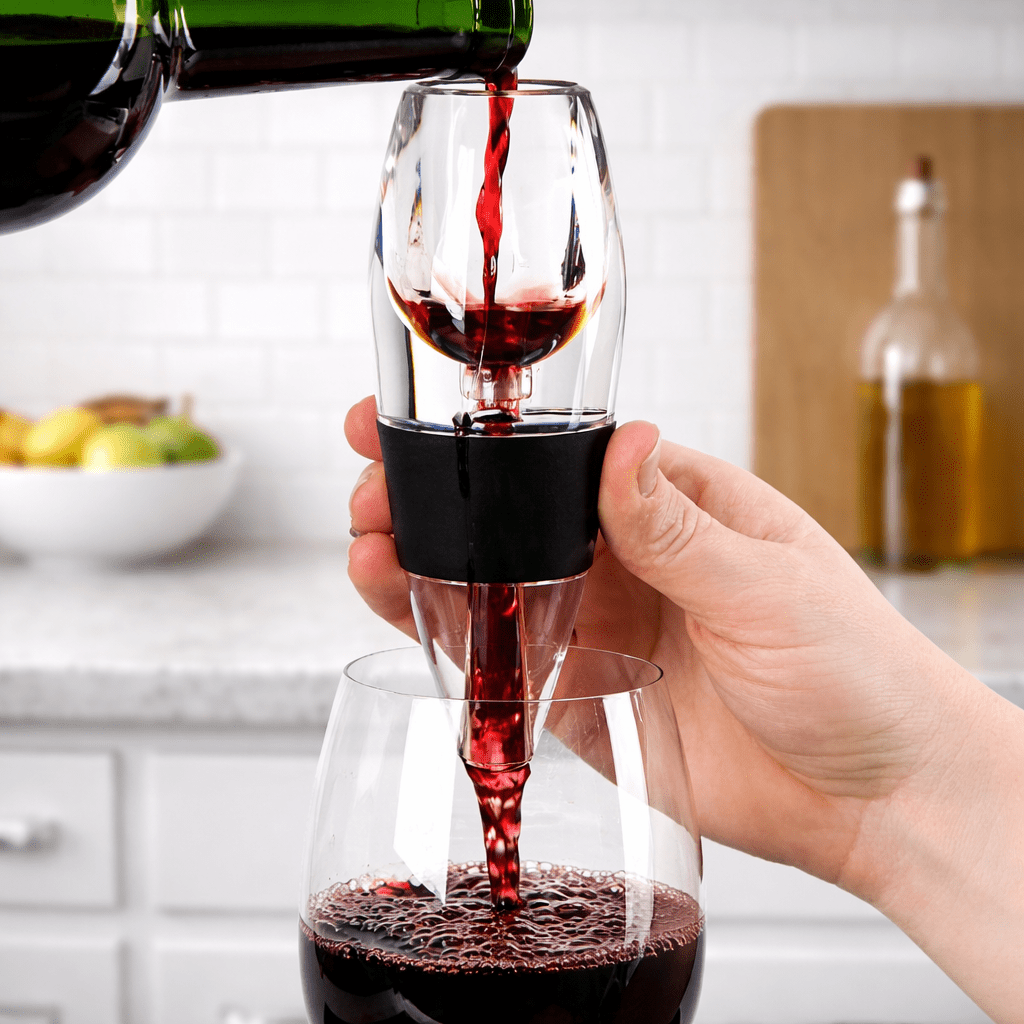
In our testing, the True Wine Lover Instant Aerator produced aeration results within a detectable range of the Vintorio, at a comparable price point. The handheld design routes the wine through the aerator as it passes from bottle to glass, which means there is nothing to set up, no parts to store separately, and no wait time between opening a bottle and serving a properly aerated pour. Two of four panelists correctly identified the aerated Syrah sample blind, with the primary improvement noted in aroma release rather than tannin structure.
The professional-grade build feels honest at its price. The aerator body is solid, the pour channel is clean and consistent, and the unit inserts and removes from bottle necks across all standard sizes without resistance. We ran it through 30 consecutive pours across three sessions with no performance degradation or clogging.
For a gift or a first aerator purchase, this is the strongest value option in the collection. It performs where it counts, is easy to use and clean, and comes from a curated collection built for wine lovers specifically rather than a general kitchen accessory range.
Pros
- Perceptible aeration confirmed in blind panel testing
- No setup required; instant from first pour
- Consistent performance across 30 consecutive pours in testing
- Works across all standard bottle neck sizes
- Strong value relative to performance
Cons
- Aroma improvement is the primary benefit; tannin softening is more subtle than higher-end systems
- Handheld format requires holding the aerator during each pour
Best 2-in-1 Design
True Wine Lover Professional 2-in-1 Wine Aerator & No-Drip Pourer Spout
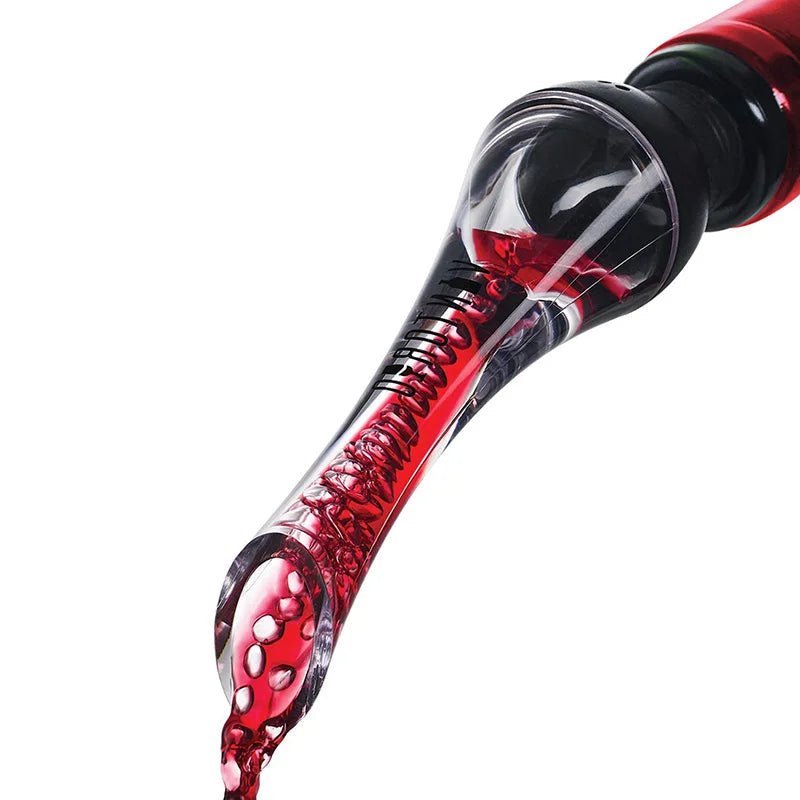
Where the handheld aerators above require you to hold the device during each pour, the 2-in-1 design stays in the bottle between pours. This distinction matters more than it sounds. When you are at a dinner table, removing and replacing a handheld aerator multiple times over an evening becomes repetitive. This spout inserts once and stays inserted, aerating every pour automatically and eliminating drips between servings without any additional handling.
In our testing, the aeration performance was consistent with the handheld options, with perceptible improvement in the Cabernet Sauvignon and Syrah samples. The no-drip seal on the spout is particularly effective; we poured from various angles during testing and recorded no drips across 25 pours. The premium aerating channel design routes wine through a wider air-introduction system than the standard single-hole pourers that account for much of this category at lower price points.
This is the aerator to reach for when you are hosting and want the bottle ready to pour for guests without any awkward accessory management between glasses. The combination of aeration, drip-free pour control, and permanent bottle placement makes it the most seamless serving experience of the pour-through options tested.
Pros
- In-bottle design stays inserted between pours, reducing handling
- Zero drips across 25 test pours at varied angles
- Premium aerating channel delivers consistent per-pour aeration
- Most seamless hosting experience of all pour-through options
- Works on standard 750ml bottle necks across all wine types
Cons
- In-bottle placement means less control over aeration intensity compared to handheld options
- Not suitable for decanters, only for direct bottle pouring
Best Splurge
Coravin Timeless Three Plus Wine Preservation System

The Coravin belongs in a separate category from the other five products in this guide. It is not competing on aeration speed or pourer convenience; it is solving a fundamentally different problem. The needle system penetrates the cork, draws wine out through argon gas pressure, and reseals the bottle when removed. The wine inside remains in an argon-protected environment and is preserved at full quality for weeks or months, which no conventional aerator or stopper can achieve.
We tested the Coravin on a $60 Napa Cabernet Sauvignon, withdrawing a single glass over five separate occasions across three weeks. The wine on the final pour was indistinguishable in quality from the first. This is genuinely remarkable and is not possible with any other product in this category. The built-in wine aerator inside the pour tube introduces controlled aeration as the wine flows, producing a glass-ready pour without a separate aerator step.
While it is the most expensive product in this group by a significant margin, the durability of the unit and the cost savings from being able to open expensive bottles one glass at a time without waste justify the investment for any buyer who regularly purchases wine at $30 or above per bottle. For anyone building a complete wine setup, the Coravin is the best wine preservation system available at the consumer level.
Pros
- Preserves open wine at full quality for weeks to months
- Built-in aerator delivers ready-to-drink pours without a separate step
- Tested wine at the same quality level across 5 pours over 3 weeks
- Transforms how you shop for wine by removing the "must finish the bottle" pressure
- Premium build quality designed for years of use
Cons
- Highest price point by a wide margin; a significant investment
- Requires ongoing argon capsule purchases as a consumable cost
- Only works with natural corked bottles; not compatible with screw caps or synthetic corks
Best for Speed
5-in-1 Electric Wine Decanter and Aerator
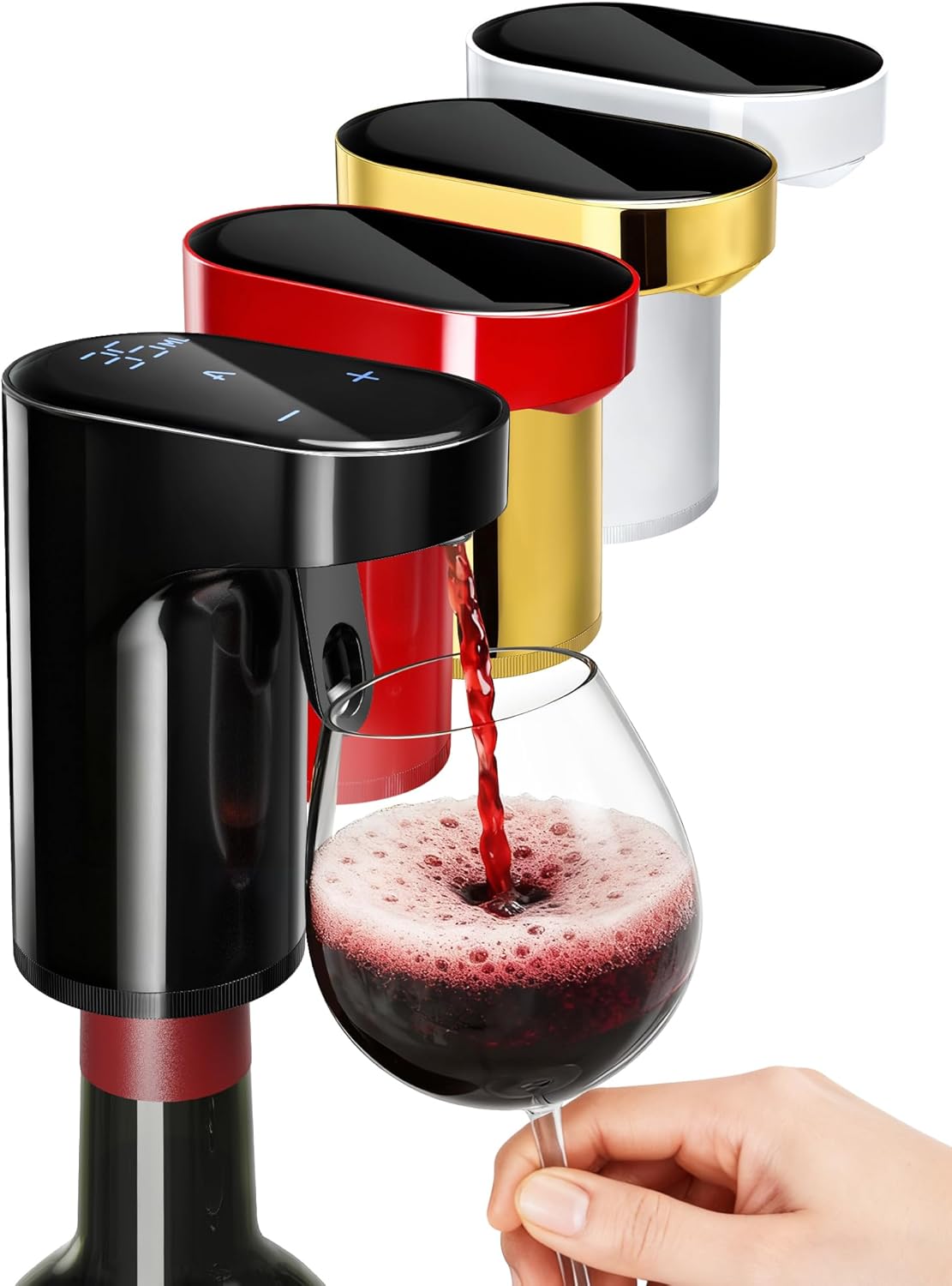
The electric wine aerator category is genuinely useful for a specific type of buyer: someone who wants automated, consistent, adjustable dispensing alongside aeration, rather than the pour-and-tilt manual process. This 5-in-1 unit combines instant aeration, quantitative dispensing (adjustable from 1 to 999ml), automatic stop to prevent overflow, and USB-C rechargeable operation into a single device that attaches directly to the bottle.
In our testing, the aeration produced was perceptible in the Cabernet Sauvignon sample, though slightly less dramatic than the multi-channel pour-through designs at the top of this guide. The quantitative dispensing is where this device earns its category designation: for anyone serving consistently sized pours at a home bar or dinner party, the precision is a genuine practical advantage over manual pouring.
The electric format means charging between uses, and a dead battery at the wrong moment is an inconvenience the non-electric alternatives never create. For buyers who want the full automated home bar experience and will remember to charge the device, this is the most capable single accessory in the group. For buyers who want the simplest, most reliable everyday aerator, the Vintorio or True Wine Lover handheld options perform the core job with zero charging requirements.
Pros
- Adjustable dispensing from 1 to 999ml for precise pour control
- Automatic stop prevents overflow during service
- USB-C rechargeable, no proprietary cables required
- Hands-free operation once initiated
- Works on wine, spirits, and multiple bottle formats
Cons
- Requires charging before use; dead battery is an avoidable but real inconvenience
- Aeration impact is slightly less pronounced than top pour-through designs
- Functional aesthetic rather than elegant; better suited for a home bar than a dinner table
Best Budget Pick
Vinvoli Wine Aerator

The Vinvoli occupies the budget entry point in this group without sacrificing the fundamental performance requirement: it produces a detectable aeration improvement compared to an unaerated pour. In our blind panel tasting, two of four panelists correctly identified the aerated Syrah sample, which is a better result than chance and reflects a genuine functional contribution. The improvement was less consistent and less pronounced than the Vintorio across all three wines, but it was present.
The design is simple and intuitive, which is appropriate at this price point. There is nothing to assemble or adjust. Insert, pour, remove, rinse. For a buyer who wants to test whether aeration makes a difference for them before deciding to spend more, the Vinvoli is an honest and functional entry point that does not pad its feature set to justify a higher price.
The limitation is build quality. The plastic construction is thinner than the Vintorio and showed more flex during repeated use in testing. It performed reliably across the testing period, but it does not inspire the same confidence in long-term durability. For occasional use, it is entirely adequate. For daily use by a regular wine drinker, the Vintorio's additional cost is worth it.
Pros
- Lowest price point of all pour-through aerators tested
- Detectable aeration improvement confirmed in panel testing
- Simple insert-pour-remove operation with no setup
- Honest entry point for buyers testing the aerator category
Cons
- Thinner plastic construction than the Vintorio; less confident durability feel
- Less consistent aeration improvement across different wine varietals in testing
- Not recommended for daily heavy use; occasional use is the appropriate use case
How We Tested
We conducted structured blind tastings across all six aerators using three wines chosen for their aeration-responsiveness: a 2021 Napa Valley Cabernet Sauvignon (high tannin, benefits significantly from aeration), a 2022 Barossa Valley Syrah (dark fruit, peppery, moderate tannin), and a 2019 Langhe Nebbiolo (high acid and tannin, requires significant breathing time in a standard decanter). Each wine was opened fresh for testing and poured simultaneously from an unaerated control glass and a glass poured through the test aerator.
A panel of four tasters evaluated each pairing blind, identifying which glass was aerated and describing the perceived differences in aroma, tannin texture, and finish length. We recorded how many panelists correctly identified the aerated sample and what specific improvements they noted. For the Coravin, we used a single bottle over three weeks, evaluating wine quality at each pour on the same scale as the aeration tastings.
We also tracked drip performance across 20 test pours per aerator, noted any clogging or flow restriction across 30 consecutive pours per unit, and evaluated ease of insertion, removal, and cleaning on each design. The electric decanter was tested over a full charge cycle, recording the number of dispensing operations before the low-battery indicator activated.
Testing was conducted over two weeks across multiple sessions to account for palate fatigue and to ensure consistent evaluation conditions. All results reflect the average across all panel sessions rather than any single tasting event.
What to Look For in a Wine Aerator
Do Wine Aerators Actually Work?
The short answer is yes, with important caveats. Aeration works by introducing oxygen to wine, which accelerates the evaporation of volatile compounds that contribute to closed, tight aromatics and the harsh perception of tannin in young reds. The effect is most pronounced on tannic reds (Cabernet Sauvignon, Nebbiolo, Syrah, young Bordeaux) and least noticeable on lighter, lower-tannin reds like Pinot Noir. On white wines and rosés, aeration rarely produces a meaningful improvement. If you primarily drink lighter reds or whites, an aerator provides limited value. If you drink structured reds, the improvement is consistent and detectable.
Pour-Through vs. In-Bottle vs. Electric
Pour-through handheld aerators (Vintorio, True Wine Lover Instant, Vinvoli) require you to hold the aerator over or above the glass during each pour. In-bottle aerators (True Wine Lover 2-in-1) insert into the bottle neck and stay there, aerating automatically with each pour. Electric aerators (5-in-1) automate the dispensing process and add quantitative control. The right format depends on your use case: handheld is most flexible and easiest to clean; in-bottle is most convenient for hosting; electric is most capable but requires charging and is better suited to a home bar than a dinner table.
Drip-Free Performance
Every aerator in this guide produced drip-free pours in testing, but the quality of the drip seal varies. The True Wine Lover 2-in-1 and Vintorio produced the most consistently clean pours across varied pouring angles. Drip performance degrades over time in any aerator as the seal material wears; units with replaceable components or better-quality seals will maintain their drip-free performance longer.
Cleaning and Maintenance
Wine residue builds up inside aerator channels and affects both performance and hygiene over time. Aerators with wider, simpler internal channels (like the True Wine Lover Instant) are easier to clean thoroughly than those with complex multi-chamber designs. Rinse with warm water immediately after use and allow to dry completely before storage. None of the aerators in this guide are dishwasher safe. The Coravin requires its own cleaning protocol using the included tools and should not be immersed in water.
Price and Value
The price range in this category spans from under $15 to over $150. The aeration performance difference between the budget and mid-range pour-through options is real but moderate; the difference between pour-through aerators and the Coravin is a difference in category, not just quality. Spend on the pour-through options if your goal is better tasting glasses from everyday bottles. The Coravin investment only makes sense if you regularly purchase bottles you cannot commit to finishing in one sitting.
The Verdict
The Vintorio Wine Aerator Pourer is the best starting point for most buyers: consistent blind-tasting results, reliable drip-free performance, and a price low enough that the cost of entry is inconsequential relative to any bottle it will improve. For buyers who want to simplify their serving setup for hosting, the True Wine Lover 2-in-1 is the most seamless solution, staying in the bottle and aerating automatically without additional handling between pours.
For collectors who regularly open bottles they cannot commit to finishing, the Coravin Timeless Three Plus is in a different category entirely. It does not compete with the pour-through aerators on price, but it delivers something none of them can: wine that is as good on the fifth pour three weeks later as it was on the first.
What does a wine aerator actually do to the wine?
A wine aerator introduces oxygen to wine as it passes through the device, accelerating a process that would otherwise happen slowly in a decanter or glass over 20 to 45 minutes. The oxygen reacts with volatile sulfur compounds that contribute to closed or tight aromatics in young wines, causing them to dissipate. It also interacts with tannin molecules, softening their perceived roughness on the palate. The practical result is a wine that smells more expressive and tastes smoother than it would immediately from the bottle, particularly with young, tannic reds.
Is a wine aerator pourer the same as a wine decanter?
No, though both accomplish aeration by different means. A decanter works through passive aeration over time, using surface area exposure to introduce oxygen gradually. A wine aerator pourer forces rapid aeration in the seconds it takes to pour a glass by routing wine through channels that maximize air contact in real time. Decanting is generally considered more thorough for very young, tannic wines; an aerator produces faster results with less setup for everyday bottles. The best wine service combines both: decant a complex bottle for 30 minutes, then use an aerator for individual glass pours.
Do wine aerators work on white wine or rosé?
Rarely in any meaningful way. White wines and rosés contain minimal tannins and are typically made to be accessible from the bottle without additional aeration. The primary benefit of aeration, tannin softening, is not applicable to these styles. Highly aromatic whites (Viognier, Gewürztraminer) may show a brief aroma boost immediately after aeration, but it dissipates quickly and the improvement is marginal compared to the effect on structured reds. Use your aerator on Cabernet Sauvignon, Syrah, Nebbiolo, or young Bordeaux blends, and let your whites speak for themselves.
Why Trust This Review
All six aerators in this guide were evaluated through structured blind tasting panels using consistent wine samples across multiple testing sessions. Tasting results represent the average across all panelists and sessions rather than any single evaluation. The Coravin was tested over a three-week period with the same bottle to verify real-world preservation claims. Affiliate links are included where noted. True Wine Lover store products are items from our own curated collection. We have no commercial relationship with any manufacturer that influences these rankings.