Cart
0

Wine Accessories
Most wine drinkers know their bottle needs to breathe. Most pour it straight anyway because waiting 30 minutes when dinner is already on the table isn't realistic.
A good wine decanter with an aerator solves this properly: it forces rapid oxygenation as wine moves through the vessel, compressing 30 minutes of passive breathing into a fraction of the time. The result is the same opened-up aromatics, softened tannins, and fuller flavor, without the wait. Here are five options worth considering, each picked for what it does best.
At a Glance: Top 5 Picks
- Best Overall Crystal Red Wine Decanter 1000ml
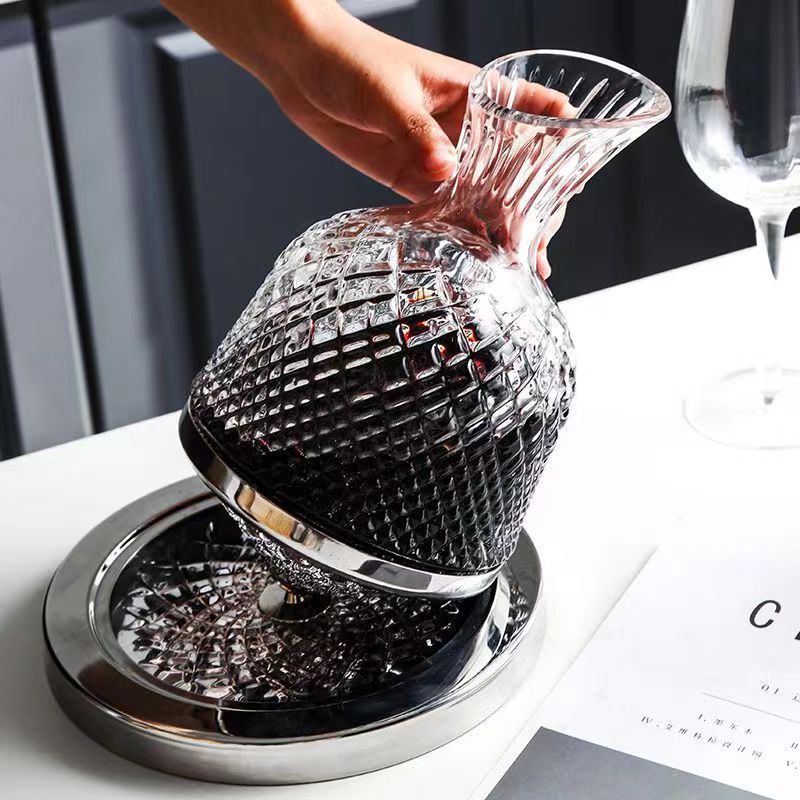
- Best Active Aerator Waterfall Red Wine Decanter
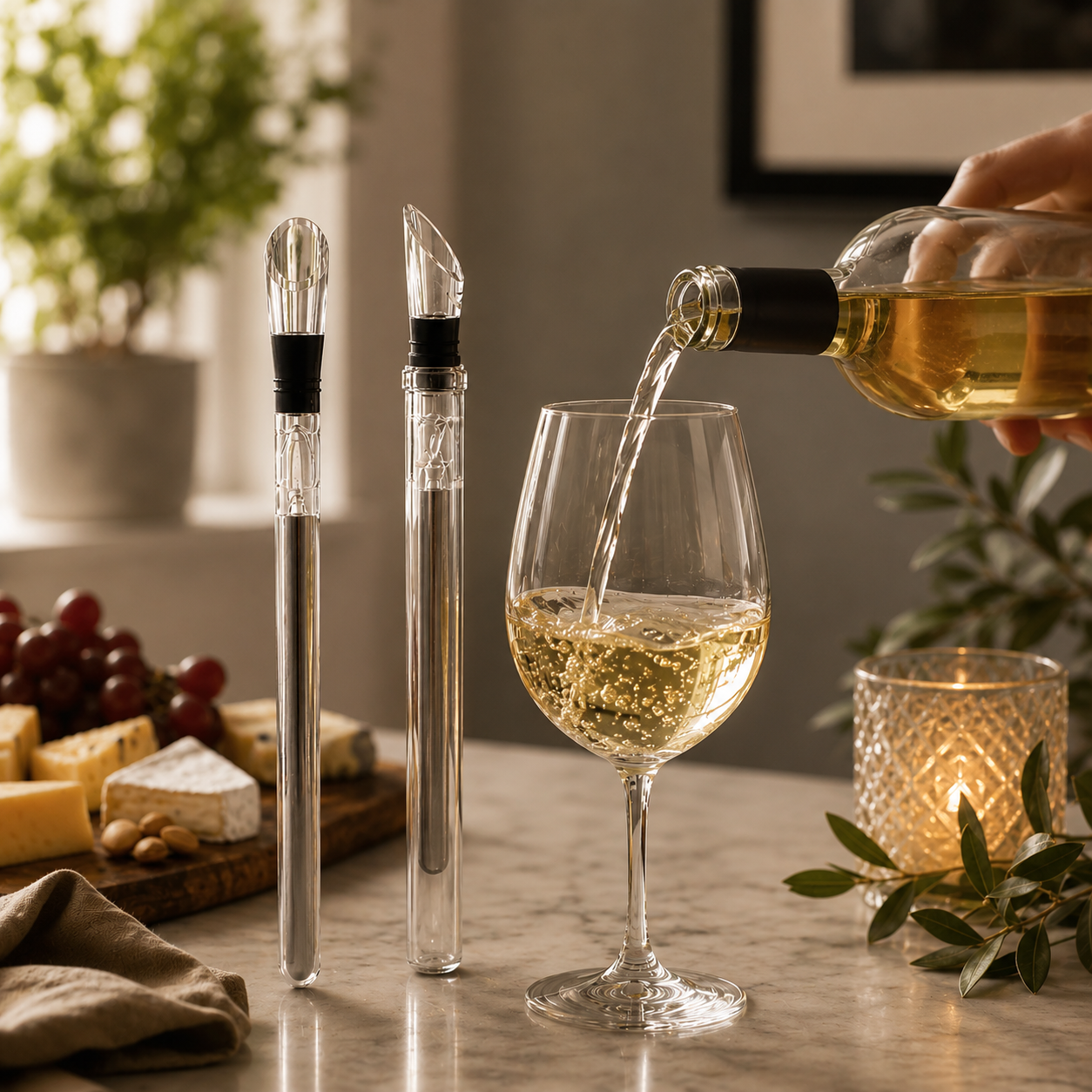
- Best Gift Set Premium Wine Breather Decanter Set
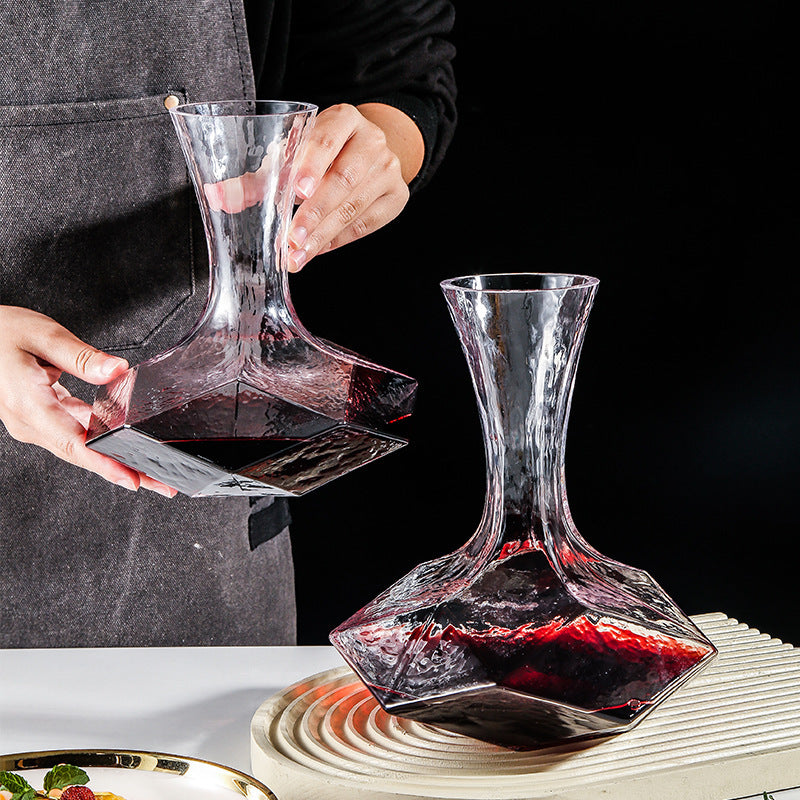
- Best Design-Forward Wavy Pattern Glass Diamond Decanter 1000ml
- Best for Entertaining Iceberg Red Wine Decanter 1800ml
What a Wine Aerator Decanter Actually Does (And What It Can't)
Wine sits sealed in a bottle with minimal oxygen contact. That sealed environment keeps it stable during transport and aging, but it also means the wine is often tight and underdeveloped when you first open it. Tannins grip. Aromatics sit compressed. The flavors that should be there are present but muted.
A standard decanter exposes wine to oxygen passively through surface area. The wider the base, the more wine contacts air at once, and the faster it opens up. This process takes 20 to 60 minutes depending on the wine's structure and age.
A decanter with a built-in aerator accelerates this by forcing wine through channels, screens, or a shaped passage that breaks the liquid into smaller droplets and maximizes air contact during the pour itself. The mechanical aeration that happens in seconds replicates some of what passive decanting achieves over much longer periods. Most aerator decanters bring a young, tannic red into a noticeably more open state within 3 to 5 minutes of pouring.
What aeration cannot do: soften the kind of structural complexity that only comes from actual bottle age, remove sediment (a passive slow-pour into a standard decanter handles that better), or save a wine that is genuinely past its prime. Aeration works on wines that are still tight and closed, not on wines that have peaked and started declining.
Wines that benefit most: young Cabernet Sauvignon, Syrah, Malbec, Barolo, Bordeaux blends, and any bold red under ten years old that tastes sharp or closed right after opening.
The 5 Best Wine Decanters with Aerator


Which One Should You Buy?
- If you want the most reliable everyday decanter: the Crystal Red Wine Decanter 1000ml handles bold reds correctly and looks right on any table.
- If you frequently forget to decant until the last minute: the Waterfall decanter aerates during the pour itself, cutting your wait significantly.
- If you want instant aeration with no vessel to manage: the Premium Wine Breather Set mounts on the bottle and delivers aerated wine glass by glass.
- If presentation is as important as performance: the Diamond Decanter does both without compromise.
- If you regularly entertain groups of four or more: the Iceberg 1800ml is the only one in this list built for that volume and that visual impact.
How to Choose the Right Wine Decanter for You
Speed vs. aesthetics. A breather or active-aerator decanter works faster. A wide-base crystal decanter looks better on the table and serves more elegantly. Many wine drinkers eventually own one of each because the use cases are genuinely different.
Cleaning reality. Every decanter in this list is hand wash only. Wide bases and curved necks mean you need a cleaning brush or decanter beads to reach the interior properly. If you want something you can rinse and rack without tools, look for a vessel with a simpler interior and a wider mouth opening.
Lead-free crystal vs. standard glass. Lead-free crystal produces sharper optical clarity and can be blown thinner for a more elegant silhouette. Standard glass is more durable and resists chips and thermal shock better. For everyday use, either material performs well. For a gift or a table piece you care about aesthetically, crystal is worth the step up.
Capacity. A 1000ml decanter is the most practical size for one bottle with comfortable headspace to swirl. If you frequently open two bottles at dinner or entertain larger groups, size up to 1500ml or 1800ml. The Iceberg at 1800ml is the choice for volume service.
Your Wine Decanter Questions, Answered
Does a wine decanter with aerator actually make a difference?
Yes, for the right wines. Young, tannic reds like Cabernet Sauvignon, Barolo, and Syrah open up measurably after proper aeration. The tannins soften, the aromas become more expressive, and the finish feels less grippy. The effect is less pronounced on light, low-tannin reds and most whites, which are better poured directly into the glass.
What is the difference between a decanter and an aerator?
A decanter aerates wine passively through surface area exposure over time. An aerator forces wine through a shaped passage or screen to accelerate air contact in seconds. A decanter with a built-in aerator does both: active aeration during the pour and passive aeration during the rest period in the vessel.
How long should wine sit in a decanter before drinking?
For bold reds like Cabernet and Barolo: 30 to 60 minutes. For medium-bodied reds: 15 to 30 minutes. For light reds and whites: 10 to 15 minutes if at all. Older wines should be decanted briefly for sediment removal and served promptly. A decanter with a built-in aerator compresses these times significantly.
How do you clean a wine decanter properly?
Rinse immediately after use while the wine residue is still wet. For thorough cleaning, use stainless steel decanter cleaning beads with warm water: add the beads and a small amount of water, swirl vigorously for 60 seconds, and rinse. Avoid dish soap if possible, as residue in curved interiors can flavor the next pour. Dry inverted over a stand to prevent water spots.
Is lead-free crystal the same as regular glass?
Not exactly. Lead-free crystal uses mineral compounds like barium or zinc oxide in place of lead to achieve a similar refractive index and workability. The result is a material that can be blown thinner than standard glass and achieves greater optical clarity, but is still more delicate and more expensive. For practical purposes: crystal looks better, glass survives more. Both work equally well for aeration.