Cart
0
Wine Education
A decanter is not just a fancy pitcher. Understanding what it actually does changes how you open every bottle going forward.
If you have ever watched someone pour wine into a wide glass vessel and leave it sitting on the counter for half an hour before dinner, you have seen decanting in action. But most people who do it cannot fully explain why, and many wine drinkers skip it entirely because no one ever told them what the point was. Both groups are missing something real. A decanter does two distinct jobs, and knowing which one applies to your bottle determines how long to use it and whether you need one at all.
What Does a Wine Decanter Do?
A wine decanter does two things: it aerates wine and it separates wine from sediment.
Aeration means exposing wine to oxygen. When wine meets air, it undergoes rapid oxidation that softens harsh tannins, releases compressed aromas, and rounds out flavors that would otherwise taste tight or sharp straight from the bottle. Young, structured reds are the clearest beneficiaries, but certain whites respond to a brief aeration too.
Sediment separation matters most with older red wines and unfiltered bottles. Over time, the pigments and tannins in red wine polymerize and fall out of solution as dark, gritty sediment. Drinking it is harmless but unpleasant. Carefully pouring the wine into a decanter while keeping the sediment in the bottle eliminates it from every glass you pour.
Both functions happen in the same vessel, but they are serving very different purposes. Aerating a young Cabernet and decanting a 20-year-old Burgundy are separate operations that happen to use the same tool.
How Does a Wine Decanter Work?
The science is straightforward. Wine sitting inside a sealed bottle has almost no contact with oxygen. The tiny amount of air in the neck and through the cork keeps the wine stable during aging but does not do much to open it up. The moment wine leaves the bottle, everything changes.
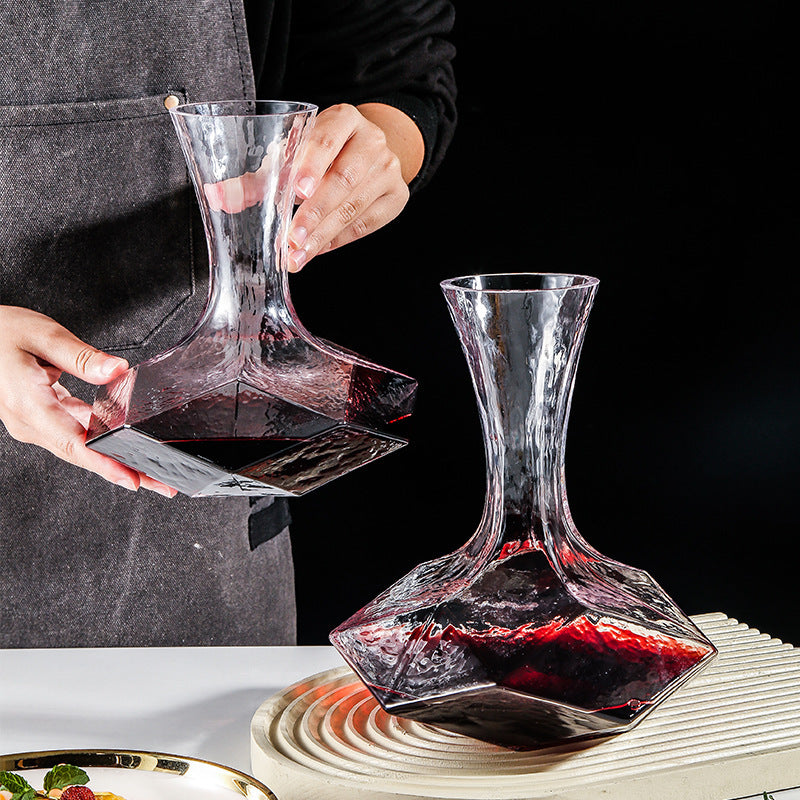
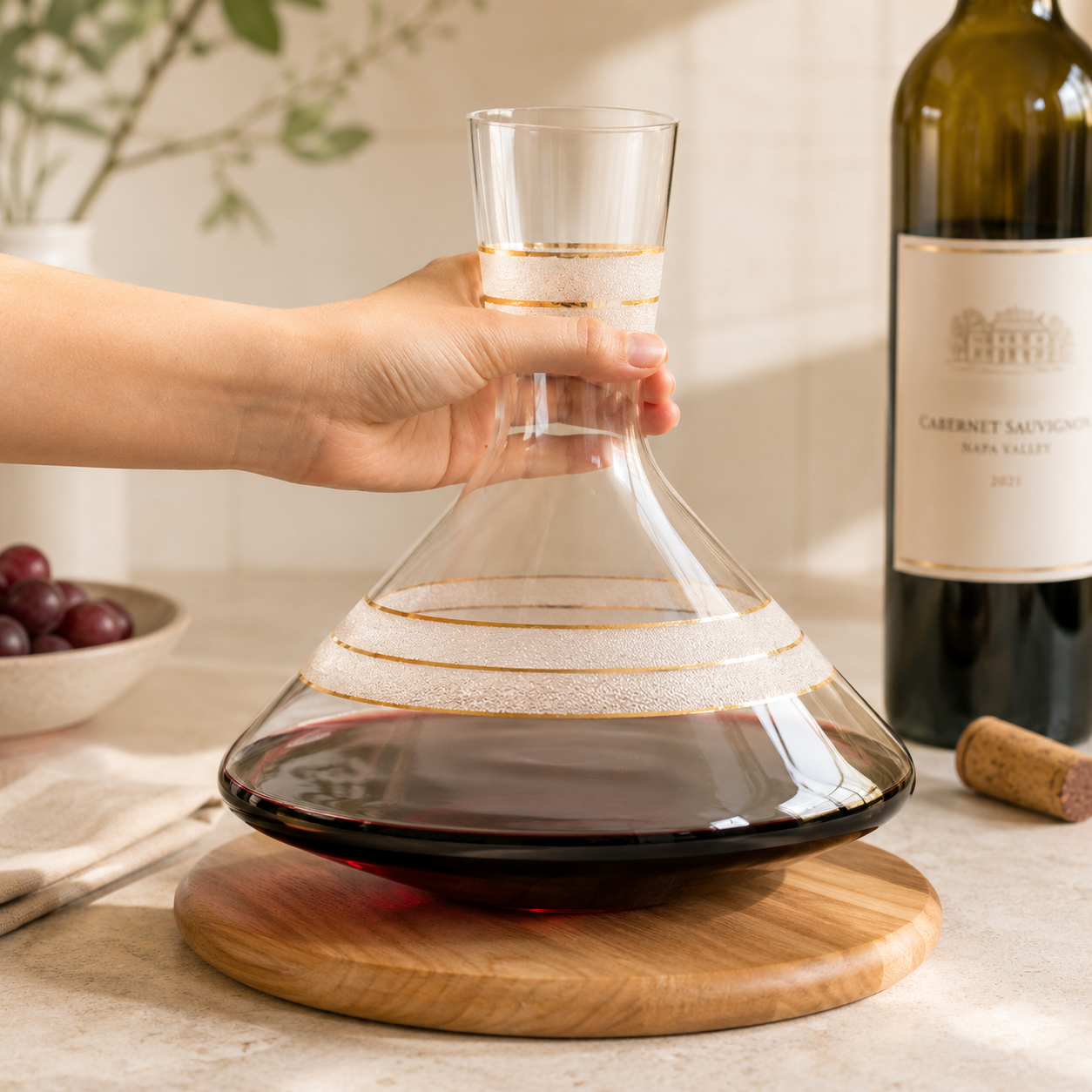
When you pour wine into a decanter, you expose it to air at two points: during the pour itself, as the wine cascades into the vessel, and afterward, as it rests in the wide-bodied container with a large surface area open to the room. The wide base of a decanter is the key engineering detail. More surface area means more wine is exposed to oxygen at any given moment, which accelerates the aeration process.
A standard wine glass holds perhaps 3 to 4 inches of surface area at the rim. A wide-based decanter exposes several times that amount simultaneously. That is why 30 minutes in a quality decanter can accomplish what would take hours of breathing in the bottle with the cork removed.
Oxygen reacts with the polyphenols and volatile compounds in wine. The result is softer tannins, which means less of that dry, gripping sensation on the back of your palate, and more aromatic complexity, because aeration releases aromatic compounds that would otherwise stay trapped in solution. The wine opens. It tastes more like what it is supposed to taste like rather than a compressed, closed-off version of itself.
What Are Wine Decanters Used For?
The two core uses of a wine decanter are aeration and sediment separation, and they apply to different wines for different reasons.
Aerating wine is the more common use case for everyday drinking. Young, tannic red wines benefit most because their tannin structure is still grippy and their aromatic profile is often tight and undeveloped right after opening. Exposing these wines to oxygen accelerates a process that would otherwise take years in bottle. Think of it as giving the wine a shortcut to a more mature, expressive version of itself. Bold reds like Cabernet Sauvignon, Barolo, Syrah, and younger Bordeaux blends all show meaningful improvement after time in a decanter.
Separating wine from sediment applies to older bottles and certain unfiltered natural wines. The sediment itself forms naturally as wine ages. It is not a sign of a flawed bottle; it is actually a sign of a wine that has been properly aged without heavy filtration. But sediment tastes gritty and bitter, so removing it from the pour improves every glass. The process requires pouring the wine slowly and steadily while watching for sediment at the bottle's shoulder, then stopping before the sediment reaches the neck.
Some bottles need both: an older tannic red may have sediment and also benefit from a brief aeration before serving. Others need only one. Knowing which situation you are dealing with is the key skill.
Why Put Red Wine in a Decanter?
Red wine gets most of the attention in decanting conversations because red wine is where decanting produces the most obvious results. The reason comes down to tannins.
Tannins are polyphenolic compounds found in grape skins, seeds, and stems. Red wines are fermented with extended skin contact, which pulls significant tannin into the finished wine. White wines skip most of this contact, so they have far less tannin. Tannins are what create that drying, gripping sensation on your palate after a sip of young Cabernet. They are also what make red wine cellar-worthy; tannins soften and integrate over years in bottle, eventually becoming part of the wine's silky texture and structural backbone.
Decanting speeds up tannin softening through oxidation. A young Cabernet that would need five more years in the cellar to show its best can taste noticeably more open and enjoyable after 45 minutes in a wide-based decanter. The tannins do not disappear; they relax and integrate more quickly than they would in the sealed environment of the bottle.
Not every red wine benefits equally. Light-bodied reds with low tannin, like Beaujolais or basic Pinot Noir, rarely need decanting and can actually suffer from too much air, losing the fresh fruit character that makes them appealing. The wines that benefit most are the ones with the most tannin and the most structural complexity waiting to emerge: Cabernet Sauvignon, Nebbiolo, Syrah, Malbec, and Bordeaux blends.
How to Use a Wine Decanter
The process is simple enough to internalize after one or two attempts.
1
Open the bottle
If the bottle is older or you suspect sediment, stand it upright for 24 hours before opening so the sediment settles to the bottom. Remove the foil and cork carefully without agitating the bottle.
2
Pour the wine slowly into the decanter
Tilt the bottle gently and pour in a steady, controlled stream. For older wines with sediment, hold a light source behind the bottle neck and stop pouring the moment you see sediment approaching the shoulder. For young wines you are aerating, pour in fully without concern.
3
Allow the wine to breathe when appropriate
Leave the decanter open and let the wine sit undisturbed. Light reds need 15 to 20 minutes. Bold reds like Cabernet or Barolo may benefit from 30 to 60 minutes. Older wines being decanted for sediment removal often need only a brief rest; too much air can flatten an older wine's delicate aromas.
4
Pour into your wine glass and serve
Hold the decanter by the neck or base, tilt over the glass, and pour. A quality decanter has a shaped spout that directs flow cleanly without dripping. Serve at the table directly from the decanter rather than returning wine to the bottle.
Quick tip: Give the wine a gentle swirl in the decanter after it has rested for a few minutes. This stirs in additional oxygen and can accelerate aeration further without the extended wait.
When Should You Use a Wine Decanter?
A decanter earns its place in specific situations. It is not something every bottle needs, and knowing when to reach for it saves time and produces better results than applying it indiscriminately.
Young, tannic red wines are the clearest case. If you are opening a Cabernet Sauvignon, Barolo, Brunello, Syrah, or Malbec that is under ten years old, decanting almost always improves it. These wines have structural tannin that benefits from oxygen exposure, and their aroma profile is often still compressed. Give them 30 to 60 minutes and taste the difference before and after.
Older red wines with potential sediment are the second scenario. Any red wine older than eight to ten years, and especially bottles over 15 years old, may have formed sediment. Decanting separates it from the wine before service. The aeration component is secondary here; older wines are often already expressive and fragile, so err toward less time in the decanter rather than more.
Full-bodied white wines and orange wines respond well to brief decanting. A rich, structured Chardonnay or an orange wine with skin tannin can show more complexity after 15 minutes of air. This is still an underused technique that surprises people when they try it.
Wines that do not benefit from decanting include light, fresh, aromatic whites, rose, sparkling wine, and simple, low-tannin reds meant to be drunk young and fresh. Decanting these wines works against their best qualities by diminishing freshness and accelerating oxidation past the good stage.
How Long Should You Decant Wine?
Decanting time depends on four variables: the wine's age, its tannin level, its structural complexity, and the reason you are decanting it.
Young, bold reds benefit most from extended decanting. A Cabernet Sauvignon under five years old may need 45 minutes to an hour before it shows its best. Barolo and Barbaresco, made from Nebbiolo grapes known for exceptionally firm tannin, are sometimes decanted for 90 minutes or more by serious wine enthusiasts. These wines have enough structure to absorb extended air exposure without losing complexity.
Medium-bodied reds with moderate tannin, like Merlot, Malbec, and younger Pinot Noir, respond well to 20 to 30 minutes. They open noticeably in that window without the risk of over-oxidizing the lighter fruit character.
Older red wines need careful handling. A 15-year-old Bordeaux or a mature Burgundy may only need 15 to 20 minutes of breathing after decanting for sediment removal. The aromatic compounds that have developed during bottle aging are often delicate and can fade quickly with too much air. Taste the wine shortly after decanting and serve it promptly rather than letting it sit open for an hour.
Structured white wines need only 10 to 20 minutes. Anything longer risks warming the wine above its ideal serving temperature and pushing oxidation further than the wine benefits from.
The easiest way to calibrate is to taste the wine immediately after opening, then again after 15 minutes in the decanter, and again after 30 minutes. You will taste the evolution in real time and know exactly when the wine is at its peak.
Wine Decanter vs. Wine Aerator: What's the Difference?
A decanter and an aerator both expose wine to oxygen, but they do it differently and at different speeds. Understanding the distinction helps you pick the right tool for the moment.
A traditional decanter aerates wine passively. You pour the wine in and wait. The large surface area of the decanter's wide base gradually exposes the wine to air over 20 to 60 minutes. Passive decanting is slower but gentler, which matters for older wines that need only a brief opening rather than aggressive oxidation.
A wine aerator aerates wine actively, forcing it through chambers, screens, or a specially shaped passage that breaks the wine into droplets and maximizes its contact with air in seconds rather than minutes. Pour-through aerators sit at the bottle mouth, and the wine is aerated as you pour it directly into a glass. Handheld aerators pump air into the wine mechanically. The result is aeration that would take 20 to 30 minutes in a decanter compressed into the time it takes to pour a glass.
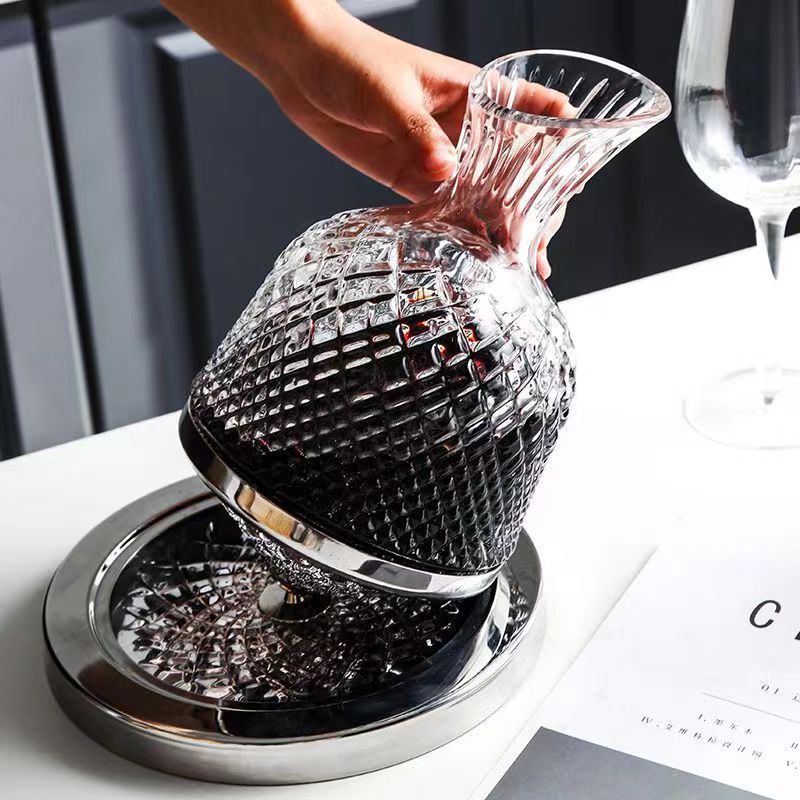
The practical difference: aerators are faster and more convenient for weeknight pours when you do not want to wait. Decanters are better when you want the wine to evolve gradually during a meal or when you are separating sediment. A rotating decanter, like the Crystal Glass Rotating Wine Decanter, bridges the gap by allowing you to actively swirl the wine during decanting to speed up the process.
Many wine lovers keep both on hand. An aerator handles quick pours on casual evenings. A decanter handles serious bottles that deserve proper attention.
Can You Use a Wine Carafe Instead of a Decanter?
Yes, with some limitations worth understanding before you make the swap.
A standard wine carafe is narrower and more straight-sided than a decanter. It lacks the wide, flat base that defines a true decanting vessel. This means less surface area and slower, less efficient aeration. For wines that need significant breathing time, a carafe takes longer to achieve the same result.
For wines that need only modest aeration, a carafe works perfectly well. Light to medium reds, everyday table wine, and white wines that need just a brief opening do not require the aggressive surface area of a wide-based decanter. Pour them into a carafe, let them sit for 15 to 20 minutes, and the result is a noticeable improvement over pouring straight from the bottle into glasses.
Carafes are also the better choice for serving rather than aerating. If you are simply moving wine from a bottle to the table for convenience and presentation, the carafe's upright shape is actually more stable and easier to handle than a decanter's wide base.
For sediment separation, a carafe works identically to a decanter. The shape of the vessel does not affect your ability to stop pouring when you see sediment approaching the bottle's shoulder. If sediment separation is your primary goal, either vessel does the job.
The short answer: a carafe is a usable substitute for most casual situations. For bold, structured reds that genuinely need significant aeration, a proper wide-based decanter with more surface area delivers noticeably better results.
Frequently Asked Questions
Can you put wine in a decanter?
Yes. Any wine can go into a decanter, though not every wine benefits from the process. Red wines with significant tannin benefit most. Light reds, whites, and sparkling wines are better poured directly into glasses rather than decanted.
How long does wine last in a decanter?
Most wines are best consumed within 18 to 24 hours of decanting. After that, continued oxidation flattens the wine's freshness and fruit. Young, tannic reds hold up longer than older or lighter wines. If you have wine left in a decanter, use a decanter stopper and refrigerate it. Drink it the following day for the best remaining quality.
What wine goes in a decanter?
Young, tannic reds are the primary candidates: Cabernet Sauvignon, Barolo, Brunello di Montalcino, Syrah, Malbec, and structured Bordeaux blends. Older red wines with sediment also benefit. Full-bodied white wines like aged Chardonnay can be briefly decanted. Sparkling wine and light, fresh whites should skip the decanter.
Does a decanter make wine taste better?
For tannic, structured reds, yes, often significantly. The right amount of aeration softens tannins, releases aromatic compounds, and rounds out flavors that taste harsh or closed straight from the bottle. The key qualifier is "right amount." Over-decanting an older or more delicate wine can tire it out rather than improve it.
How much wine does a decanter hold?
Most standard decanters hold 750ml to 1000ml, which accommodates a standard bottle (750ml) with headspace to spare. Some decanters hold up to 1500ml or more for entertaining. A 1000ml decanter is the most practical size for everyday use since it handles a full bottle comfortably and still leaves room to swirl.
Can a wine decanter go in the dishwasher?
Most crystal and hand-blown glass decanters are hand-wash only. Dishwasher heat and detergent etch the glass over time, creating a permanent cloudiness that dulls the decanter's clarity. Standard commercial-grade glass carafes may be labeled dishwasher-safe but still benefit from hand washing to preserve their appearance. Always check the product label before assuming.
Find the Right Wine Decanter
Ready to give your favorite wines more room to breathe? Our collection of glass and crystal wine decanters is built for effortless pouring and serving, from everyday table reds to bottles you have been saving for a special occasion.
Crystal Decanter
Crystal Red Wine Decanter 1000ml
Wide base, lead-free crystal, full-bottle capacity.
Swirl Decanter
Swirl Crystal Red Wine Decanter with Base
Elegant swirl shape with a stable display base.
Statement Piece
Iceberg Red Wine Decanter
Dramatic sculptural shape that becomes a conversation starter.
Premium Crystal
Beveled Edge Crystal Wine Decanter
Beveled facets catch the light for a refined table presence.
Rotating Decanter
Crystal Glass Rotating Wine Decanter
Spin to aerate faster. A showstopper at any dinner table.
Pour-Through Aerator
Wine Aerator and Pourer with Strainer Base
Aerate as you pour, no waiting required.
Electric Aerator
Intelligent Wine Aerator Dispenser Rechargeable
One-touch electric aeration for instant results.
Automatic Decanter
Automatic Wine Decanter Dispenser
Automated pour and aerate in one seamless step.