


Cart
0
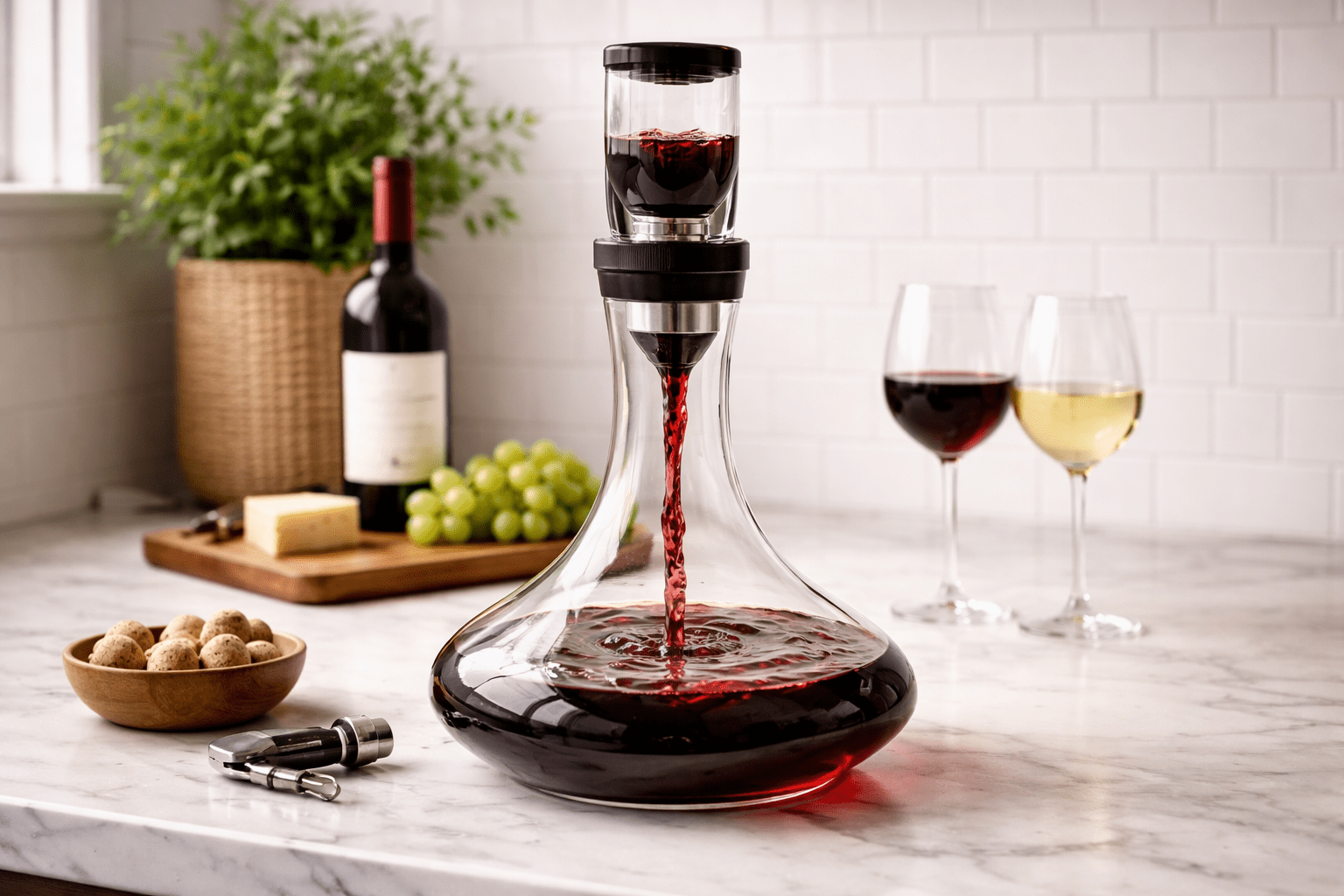
Most wine drinkers know their bottle needs to breathe — and most of them pour it straight anyway because waiting 30 minutes when dinner is already on the table isn't realistic. A good wine decanter with an aerator solves this problem properly: it forces rapid oxygenation as the wine moves through the vessel, compressing 30 minutes of passive breathing into three to five minutes of active exposure. The result is the same opened-up aromatics, softened tannins, and fuller flavor — without the wait. Here are the five options worth considering, ranked by what they actually do well.

Quick Summary
The S JUSTSTART leads for everyday use — fast, functional, and well-priced. Le Chateau is the upgrade pick for anyone who wants hand-blown crystal and easy cleaning. VnoPerito is the best gift set of the group. Gusto Nostro is the design-forward entertaining piece. And the Redsack electric decanter is the wildcard — genuinely useful for a different kind of wine drinker entirely.
What a Wine Aerator Decanter Actually Does (And What It Can't)
When wine is sealed in a bottle, it's essentially in a reduced state — cut off from oxygen, with its aromatic compounds locked tight and its tannins in their most astringent form. Opening the bottle introduces oxygen slowly through the narrow neck, which is why simply pulling the cork and waiting changes almost nothing. Decanting — pouring the wine into a wider vessel — dramatically increases the surface area exposed to air, which accelerates the process.
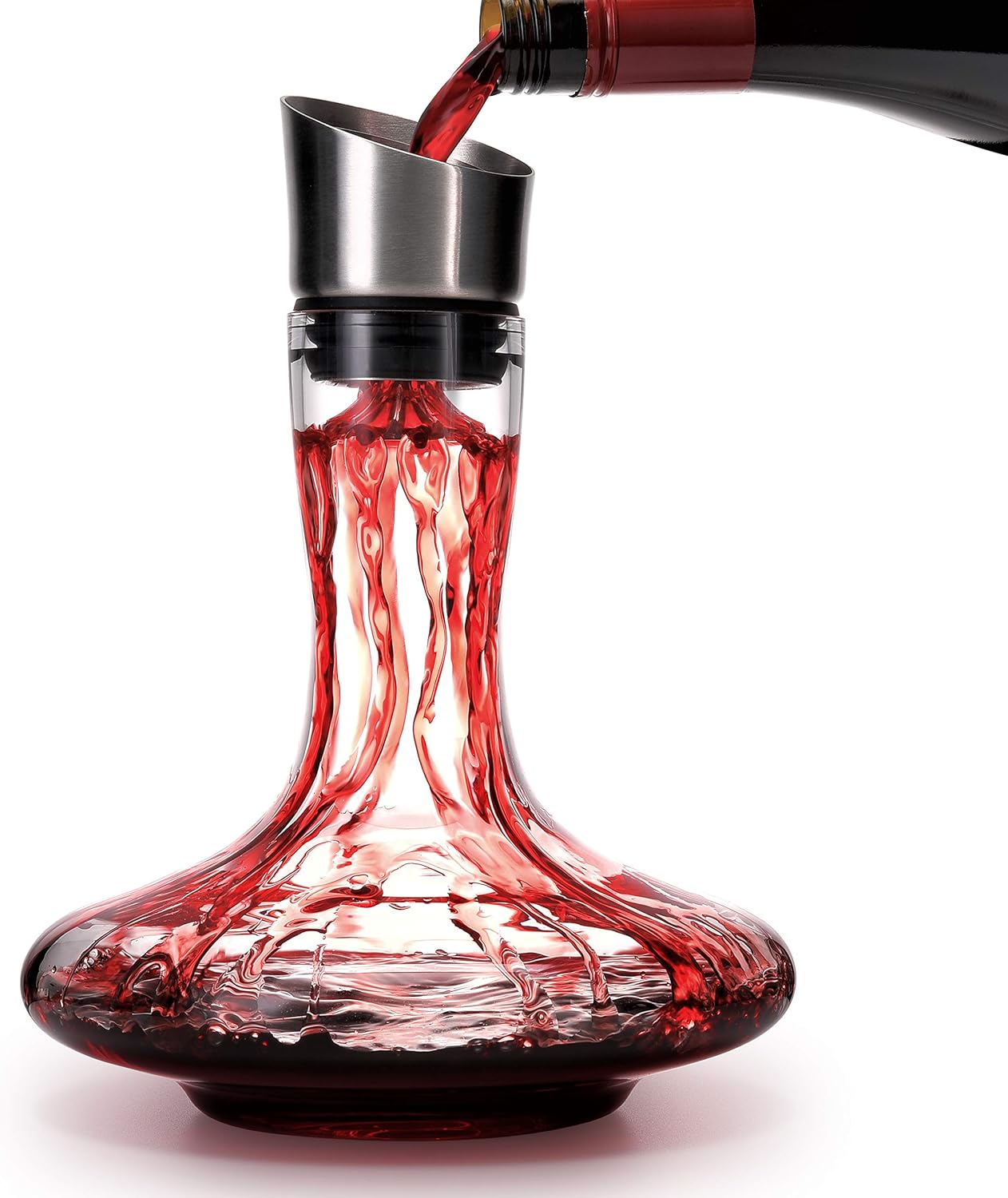
A wine decanter with a built-in aerator takes this further. The aerator forces wine through a narrow channel or screen as it's poured, breaking it into smaller streams and dramatically increasing air contact during the pour itself. By the time the wine settles in the decanter, the heavy lifting is already done. Three to five minutes in a well-designed aerating decanter delivers results comparable to 20–30 minutes of passive breathing in a standard carafe.
What aeration can't do: fix a wine that's past its prime, rescue a bottle with a genuine flaw, or substitute for the long, slow decanting that a genuinely old, sediment-heavy wine needs. A 2005 Barolo with sediment at the bottom needs careful slow pouring over a candle — not a three-minute blast of forced air. For young, tight reds that just need to open up? An aerating decanter is exactly the right tool.
Which wines benefit most: Young, tannic reds — Cabernet Sauvignon, Syrah, Nebbiolo, young Bordeaux. Bold, structured wines that haven't had time to soften in the bottle gain the most from aeration. Light reds like Pinot Noir benefit less. White wines and rosés rarely need it at all.
The 5 Best Wine Decanters with Aerator, Ranked


Which One Should You Buy?
- Best overall: S JUSTSTART — fastest aeration, drip-free spout, best value for everyday use
- Best for easy cleaning: Le Chateau — wide mouth opening accepts a standard sponge, hand-blown crystal quality
- Best gift set: VnoPerito — complete set, 360-degree aeration, stainless steel lid, looks impressive boxed
- Best for entertaining: Gusto Nostro — wide-base design, aerates at serving, the best-looking piece on a table
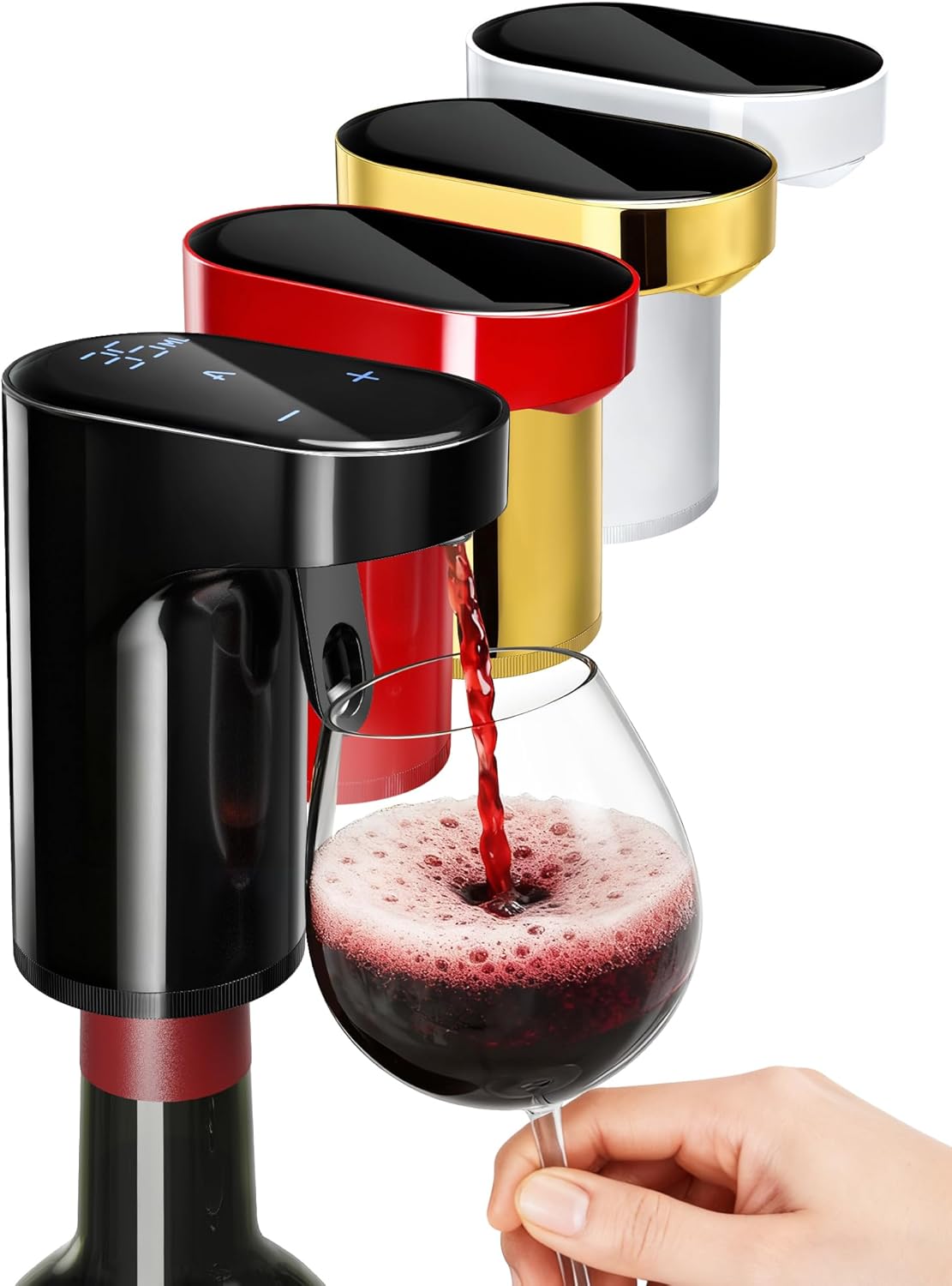
- Best tech pick: Redsack Electric — instant aeration, precise dosing, multi-spirit use — for the home bar, not the dinner table
How to Choose the Right Wine Decanter Aerator for You
- Speed vs. elegance is the core trade-off. Filter-based aerators (S JUSTSTART, VnoPerito) aerate fastest — three to five minutes. Wide-base designs (Gusto Nostro) aerate more gradually through surface exposure — better-looking on a table, slightly slower results. Neither is wrong; it depends on your typical situation.
- Cleaning tolerance should drive your decision more than most people admit. The most beautiful decanter in the world becomes useless if you stop using it because it's annoying to clean. If your hands are large or you hate specialized brushes, prioritize a wide mouth opening above almost everything else.
- Lead-free crystal is non-negotiable. All five picks here use lead-free construction, but if you're ever shopping outside this list, verify it explicitly. Lead crystal decanters exist and are still sold — they're not safe for wine service.
- 750ml capacity is standard, but check before buying. If you regularly pour magnum bottles or want to decant two bottles for a large dinner, verify the stated capacity and make sure it actually accommodates what you pour.
- Gift context changes the calculus. For a gift, presentation matters as much as performance. The Le Chateau and VnoPerito both arrive looking impressive without explanation — the S JUSTSTART is the better everyday performer but a less striking unboxing experience.
Your Wine Decanter Questions, Answered
Does a wine decanter with aerator actually make a difference?
Yes — for the right wines. Young, tannic reds (Cabernet Sauvignon, Syrah, Nebbiolo, young Bordeaux) show measurable improvement in aroma and texture after proper aeration. The tannins soften, the fruit opens up, and the wine smells more expressive. Light reds like Pinot Noir gain less from aeration. White wines and rosés rarely benefit at all. If you primarily drink lighter wines, a decanter with aerator is less essential than if you regularly open structured reds.
What's the difference between a decanter and an aerator?
A decanter is the vessel — a wide-based glass container that holds the wine after pouring and aerates it passively through surface exposure. An aerator is a device that forces air through the wine rapidly during the pour itself, dramatically accelerating the process. A wine decanter with a built-in aerator combines both: the wine gets actively aerated as you pour it in, then continues to breathe passively in the wider vessel. This combination is faster and more effective than either approach alone.
How long should wine sit in a decanter with aerator before drinking?
With an aerating decanter, three to five minutes is typically enough for a young red wine that needs to open up. Without the built-in aerator, standard decanting takes 20–45 minutes for similar results. Very old wines (15+ years) or wines with significant sediment should be poured slowly and carefully — speed is less important than not disturbing the settled material at the bottom of the bottle. For those, a simple wide-base decanter without aggressive aeration is actually the better tool.
How do you clean a wine decanter properly?
Rinse immediately after use with warm water — wine residue is much easier to remove before it dries. For narrow-necked decanters, use a long-handled decanter brush or add a small amount of uncooked rice with warm water and swirl to scrub the interior. Never use soap inside a decanter — it leaves residue that affects the next bottle's taste. For stubborn staining, a small amount of white wine vinegar diluted in warm water works well. Air dry completely before storing, upside down in a decanter drying stand if possible.
Is lead-free crystal the same as regular glass?
Not exactly. Lead-free crystal typically contains barium oxide or zinc oxide in place of lead oxide, which preserves the clarity, weight, and refraction that make crystal visually distinct from standard glass, without the toxicity risk of traditional lead crystal. Regular glass lacks these mineral additions and tends to be slightly cloudier and lighter. For wine decanters, lead-free crystal is the ideal material: it's safe, beautiful, and flavor-neutral. All five picks in this guide use lead-free construction.
Bottom line: If you regularly open tannic reds and want them drinking better within five minutes of uncorking — a wine decanter with a built-in aerator is one of the most useful things you can add to your setup. Start with the S JUSTSTART for everyday use. Upgrade to the Le Chateau or Gusto Nostro when you want something that earns a second look on the table.
Exploring the rest of your wine setup? Our guide to The Easiest Decanter Cleaning Method You've Never Tried Before


