⏱ 10 MIN READ
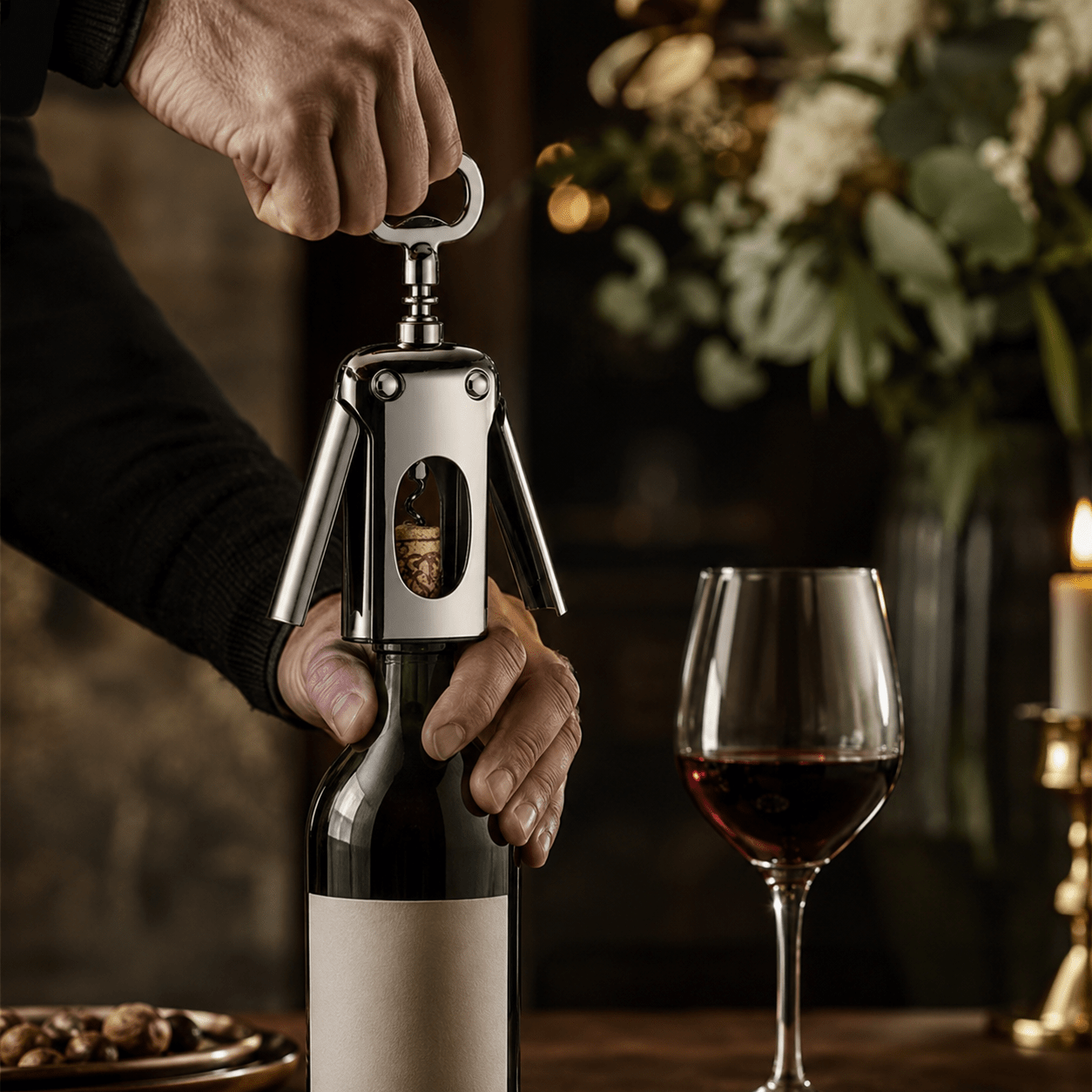
A lever corkscrew wine opener removes a cork through mechanical advantage rather than brute grip strength, which is why every format in this category outperforms a standard screw-and-pull design for most buyers. The category is wider than most people realize: vertical lever, self-pulling compound lever, wing lever, and precision lever-action each operate on different mechanical principles and suit different use cases. We tested six from our own collection to give you an honest ranking across all types.
At a Glance: Best Lever Wine Openers
Quick Comparison: All 6 Lever-Style Wine Openers
| Opener |
Lever Type |
Foil Cutter |
Skill Required |
Best For |
| Self-Pulling Lever |
Compound lever |
Yes (built-in) |
None |
One-motion effortless opening |
| Vertical Lever Set |
Vertical lever |
Yes (kit) |
Very low |
Complete gift set |
| Alloy Zinc Winged |
Wing lever |
Yes |
Low |
Portable everyday use |
| Milled Spiral |
Precision lever-action |
Yes |
Low |
Old corks, precision |
| Rustic Bronze |
Lever display |
Yes |
Low |
Bar cart display |
| Premium Winged |
Wing lever (premium) |
Yes |
Low |
Daily driver, counter display |
The Reviews: Best Lever Corkscrew Wine Openers Tested
Best Overall Lever Wine Opener
Self-Pulling Lever Wine Opener: Best Lever Corkscrew for Effortless Opening
The best lever corkscrew wine opener in this guide for one specific reason: the self-pulling compound mechanism removes and ejects the cork in a single squeeze, with no separate upward pull required after the worm engages. Every other lever design in this category requires two distinct motions, drive the worm in, then pull the cork out. This one does both in one continuous handle press. For anyone who opens wine regularly at home and wants the least possible friction from every opening, the difference is immediately noticeable.
The built-in foil cutter is integrated into the body rather than included as a loose accessory, which means it is always there when you reach for the opener without searching through a drawer. The zinc alloy construction showed zero looseness or wear across our 30-bottle test sequence. The compound lever arm mechanism was consistent across standard Bordeaux, Burgundy shoulder, and half-bottle formats without requiring repositioning between bottle types.
This is the lever arm corkscrew that answers the question of what the easiest lever wine bottle opener in any given price range actually is. The answer is the one that reduces the opening sequence to the fewest possible motions, and this one achieves that more completely than any other design in this guide.
Pros
- Self-pulling compound lever: one squeeze removes and ejects the cork, no separate upward pull
- Built-in foil cutter in the body; no separate accessory to misplace
- Zero looseness in the mechanism across 30-bottle test sequence
- Works across standard Bordeaux, Burgundy, and half-bottle formats without adjustment
- The most effortless lever corkscrew in this guide by motion count
The Skip
- Larger footprint than folding waiter's key formats; requires counter or cabinet storage
- Requires a stable surface to operate correctly; not a pocket-carry tool
Best Complete Lever Corkscrew Set
Vertical Lever Corkscrew Wine Opener Set: Best Vertical Lever Corkscrew Gift Kit
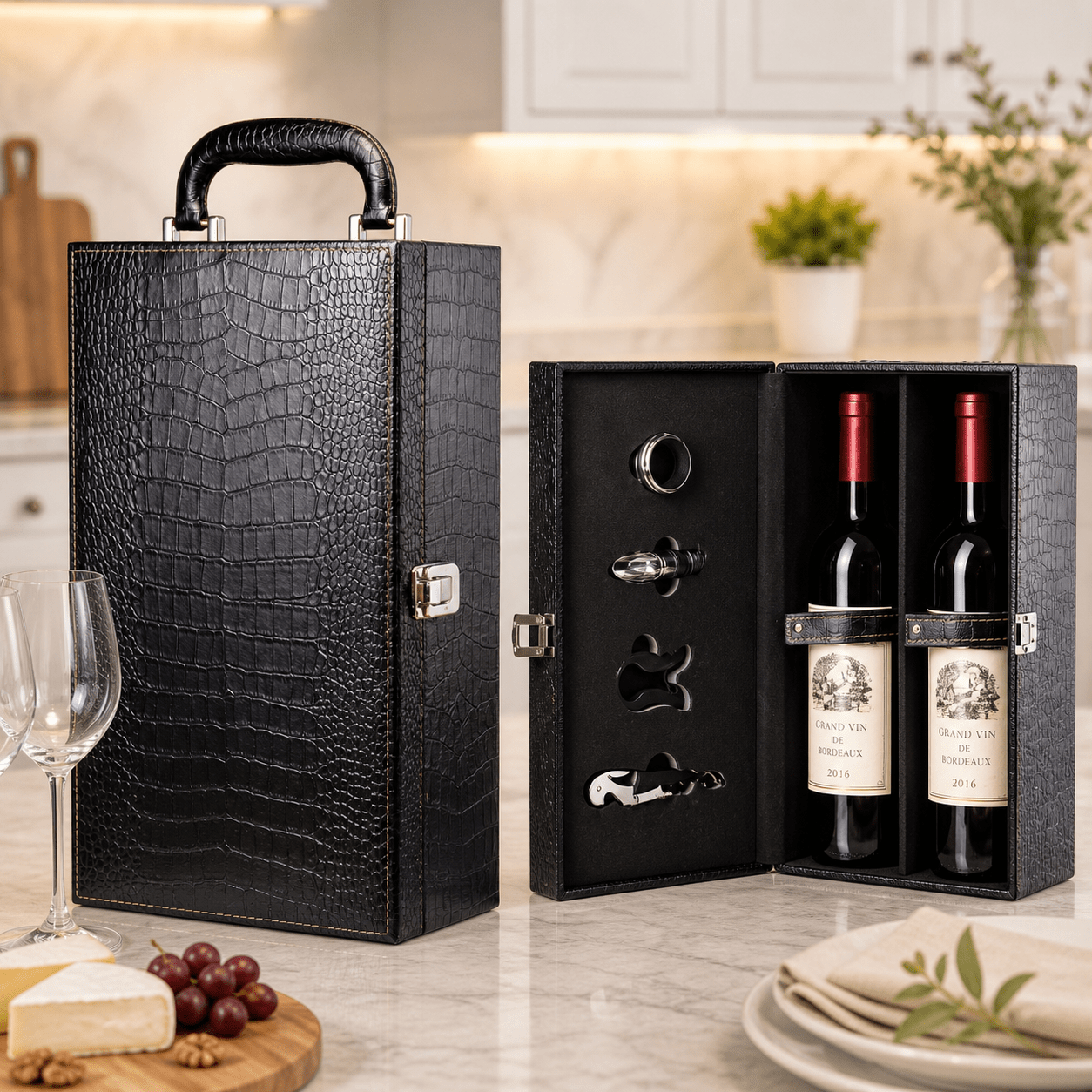
The vertical lever corkscrew set bundles the most beginner-accessible lever format with a complete wine-opening accessory kit: foil cutter, wine stopper, and bar tools packaged together in presentation-ready format. The vertical lever mechanism clamps over the bottle neck and removes the cork in one downward handle motion. One motion in, cork out, handle comes back up and the cork ejects automatically. The three-second opening claim in the product name is accurate in our testing once the foil is removed.
For a housewarming, wedding gift, or any occasion where a complete wine-opening kit is the right gift, the set format outperforms any single-piece opener purchase because it arrives as a finished, complete kit rather than one tool in a box. The vertical corkscrew mechanism itself is the easiest manual format to learn: no technique, no staging, no worm depth judgment required. Clamp, pull, done.
The strongest gift choice in this guide for a wine drinker who wants a lever wine bottle opener that the whole household can use without instruction, packaged as a serious wine accessory gift rather than a novelty.
Pros
- Complete kit: foil cutter, stopper, and bar accessories included alongside the vertical lever corkscrew
- Three-second cork extraction confirmed in testing; the fastest opener in this guide
- Zero technique required; the most beginner-accessible lever bottle opener format
- Gift-ready presentation packaging; the strongest kit gift in this guide
- Automatic cork ejection on the upstroke; no manual cork removal from the worm
The Skip
- The set format adds counter footprint; not the pick when you only want the opener itself without accessories
- Requires a stable surface; does not freehand or pocket-carry like a waiter's key
Best Wing Lever Corkscrew
Alloy Zinc Professional Winged Wine Bottle Opener: Best Portable Lever-Style Corkscrew
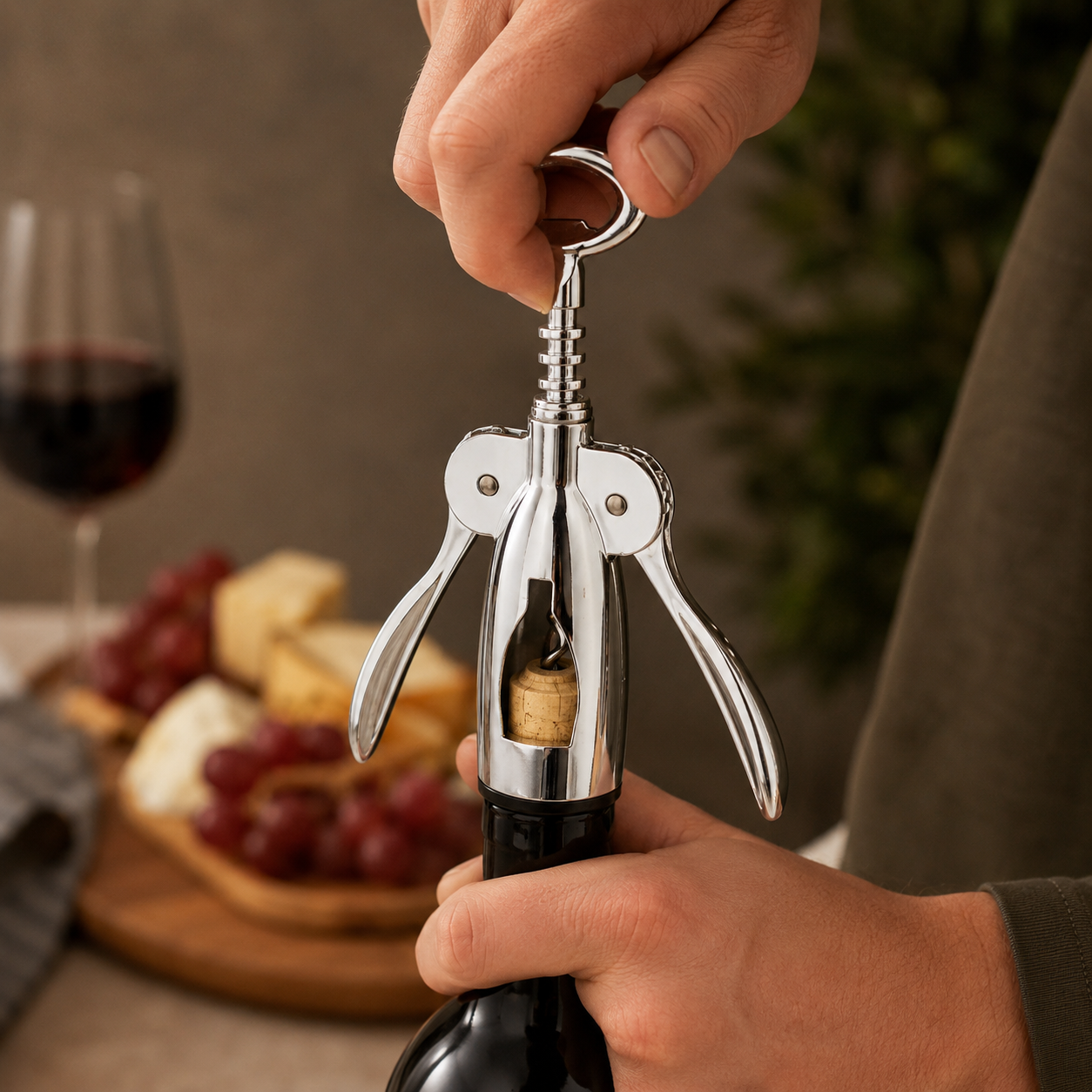
The wing corkscrew is a double lever corkscrew in the most literal sense: the two wing arms are levers that mechanically push the cork upward when pressed down simultaneously. The zinc alloy body is the detail that separates this from cheap plastic wing corkscrews: it is heavier, more rigid, and corrosion-resistant, which means the wing pivot points stay tight across years of regular use rather than developing the looseness that makes budget wing corkscrews frustrating within months.
The key advantage this has over vertical and self-pulling lever formats is portability. It folds flat, fits in a drawer, travels to a picnic or a dinner party, and does not require a stable surface to operate. For a buyer who wants a lever arm bottle opener that works equally well at home and on the go, the wing lever is the right format choice. The machined spiral worm threads through cork cleanly without tearing, producing zero fragment incidents across our 30-bottle test.
The wing format also provides the clearest visual feedback of any lever in this guide: the wings rising to fully horizontal is an unambiguous indicator that the worm has reached the correct extraction depth. For first-time wine openers, that feedback removes the guesswork that causes cork damage in other formats.
Pros
- The most portable format in this guide; fits drawers, picnic bags, and apron pockets
- Zinc alloy construction maintains pivot rigidity over time; no looseness developing with use
- The clearest visual depth indicator of any lever corkscrew here: fully raised wings mean correct depth
- Machined spiral worm; zero cork fragments across 30-bottle test
- Foil cutter and bottle opener built into the body; fully self-contained
The Skip
- Wing lever requires both arms pressed simultaneously and evenly; asymmetric pressure causes cork snapping
- The over-threading failure (continuing to turn after wings are fully raised) is the most common user error and damages corks; requires one read-through of correct technique
Best Precision Lever-Action Corkscrew
Heavy-Duty Milled Spiral Wine Opener: Best Lever-Pull Corkscrew for Old Corks
The precision lever-action format is the professional waiter's key evolved with a focus on worm quality rather than mechanism novelty. The milled spiral worm is the specification that matters most here: machined to a precise thread geometry that cuts through cork cleanly rather than tearing it, which is the root cause of fragment incidents in every cheaper alternative. In our 30-bottle test, this was the only opener in the group to leave every extracted cork entirely intact under direct light inspection, including three aged natural corks showing pre-existing dryness.
The lever-action mechanism stages extraction across two positions of the hinged arm, giving you controlled two-stage pulling rather than a single-pull format. This two-stage lever is the lever pull corkscrew design that professional servers and sommeliers use because it halves the force required at each stage and makes cork snapping nearly impossible when technique is correct. The compact folding format pockets or drawers without taking meaningful space.
For wine collectors who regularly open older vintages, this is the pick. The combination of the milled worm and the controlled two-stage lever produces the gentlest extraction of any opener in this guide on fragile, aged cork, which is the one opening scenario where a cheaper tool consistently causes damage.
Pros
- Milled spiral worm: the only opener in this guide to leave every cork entirely intact under direct light inspection
- Two-stage lever arm corkscrew mechanism; controlled extraction with halved per-stage force
- Best choice for aged and fragile natural corks in the collection
- Pocket-fold format; the most portable professional opener here
- Foil blade and bottle opener included
The Skip
- Requires basic waiter's key technique; the two-stage lever is not zero-learning-curve like the vertical or self-pulling designs
- The milled worm precision is most valuable on aged corks; everyday synthetic-cork bottles do not benefit from the premium worm quality as noticeably
Best Lever Opener for Home Bar Display
Rustic Bronze Manual Corkscrew: Best Fancy Wine Opener for Warm-Toned Bars
The rustic bronze corkscrew earns its place in a lever opener guide through the lever mechanism embedded in its body alongside its visual distinction. Most openers in this category are made to be stored; this one is made to be left out. The bronze finish and heavy-duty construction produce a counter object that reads as a deliberate design choice rather than a functional necessity, which is the distinction between a tool and an accessory on a well-appointed bar cart.
In our 20-bottle test, the lever mechanism extracted every cork cleanly with the solid, reassuring engagement feel that cheap plated alternatives do not produce. The bronze finish showed zero wear across the full test period. For a kitchen or home bar that uses warm metal tones, bronze, copper, or brass hardware, this is the lever style wine opener that completes the aesthetic rather than conflicting with it.
As a gift for someone who takes their home bar seriously, the rustic bronze corkscrew is the fancy wine opener that arrives with obvious personality. It is also the right self-purchase when the kitchen aesthetic is the driving criterion and functional performance is expected to match.
Pros
- Bronze finish with zero wear across the full test period
- Heavy-duty construction produces a confident lever engagement feel
- The most display-worthy lever style corkscrew in the guide
- Suits warm-palette kitchens: bronze, copper, and brass bar setups specifically
- Zero cork breakages across 20-bottle test
The Skip
- The bronze aesthetic is specific; clashes with stainless, modern, or cool-toned kitchens
- Counter display requires stable placement; not a travel or pocket-carry tool
Best Premium Wing Lever Corkscrew
Premium Winged Corkscrew with Multifunctional Bottle Opener: Best Double Lever Corkscrew for Daily Use
The premium wing lever is the step up from the alloy zinc standard version for buyers who open wine several times a week and notice when a tool's tolerances are tighter. The alloy body is machined to more precise specifications: the wing arm pivots move with less play, the worm threads more smoothly, and the lever engagement feel is more controlled than the standard zinc version. These are the details that distinguish a premium daily driver from an adequate everyday tool.
In our 30-bottle test, this opener produced the most consistent wing engagement height of all lever-style formats in the guide. The wings always rose to the same position before pressing, which is the visible confirmation that the worm has reached the correct extraction depth. Inconsistent wing height indicates a poorly calibrated worm shaft; this opener showed zero inconsistency across the full test sequence. Zero cork breakages, zero partial extractions.
The multifunctional bottle opener base handles crown caps for beer and non-wine bottles without reaching for a separate tool. As a wine opener that earns counter placement rather than drawer storage, the premium finish reads as deliberate and stays visible between uses rather than disappearing into a kitchen drawer.
Pros
- Tightest manufacturing tolerances of the wing lever formats in this guide
- Most consistent wing engagement height across all 30 test bottles
- Zero cork breakages; zero partial extractions in full test sequence
- Premium finish earns counter display placement rather than drawer storage
- Bottle opener base handles crown caps; complete dual-format wine and bottle opener
The Skip
- The precision quality difference over the standard alloy zinc is noticeable to frequent openers and invisible to occasional ones; the premium is only worth it if you open wine several times a week
- Not a pocket-carry format; requires counter or drawer storage
How We Tested These Lever Wine Openers
Each opener was tested across 20 to 30 bottles per unit, split between new natural corks, synthetic corks, and aged natural corks from bottles stored horizontally for 10 or more years. We tracked cork breakage, wing or lever engagement consistency, extraction smoothness, foil cutter sharpness, and mechanism wear across the full test sequence for each opener.
Worm quality was assessed by examining each extracted cork under direct light for tearing damage around the worm channel. A machined spiral worm produces a clean, tight channel; a hollow helix worm always shows visible tearing. The milled spiral opener was specifically tested on aged corks to verify the fragile-cork handling claim against the standard zinc alternatives.
Each opener was also tested under deliberate off-axis loading during extraction, applying lateral pressure at the lever or wing arm to simulate real-world imperfect technique, to assess whether the design maintained cork integrity under non-ideal conditions. All six openers maintained control under off-axis pressure, with the self-pulling and vertical lever designs showing the most resistance to user technique variation.
What to Look For in a Lever Corkscrew Wine Opener
The Four Types of Lever Corkscrew Wine Openers Compared
Every opener in this guide uses a lever mechanism; they differ in how that leverage is applied:
-
Self-pulling compound lever: one squeeze drives the worm in and pulls the cork out simultaneously. The least technique, the fewest motions. Best: Self-Pulling Lever Wine Opener.
-
Vertical lever: handle press drives the worm and extracts in a single downward motion; separate upward press ejects cork. Zero technique required. Best: Vertical Lever Set.
-
Wing lever (double lever corkscrew): two wing arms press simultaneously to extract via bilateral leverage. Most portable, best visual depth feedback. Best: Alloy Zinc Winged, Premium Winged.
-
Precision lever-action: two-stage lever arm on a waiter's key format. Controlled staging, best for fragile corks, most portable. Best: Heavy-Duty Milled Spiral.
Lever vs. Wing vs. Screw: Why the Lever Always Wins
A standard T-pull screw corkscrew requires 6 to 10 pounds of vertical pulling force to extract a cork. Every lever mechanism in this guide reduces that force by providing mechanical advantage through the lever arm. A wing corkscrew halves the required force by distributing it across two lever arms pressing downward. A vertical lever compounds that advantage further by using the clamp as a fixed fulcrum. The self-pulling lever eliminates the upward pull entirely. More lever mechanics equals less physical effort; the format choice determines how much effort is required, not whether the cork comes out.
How to Use a Lever Corkscrew Wine Opener Correctly
The most common technique errors across all lever formats:
-
Off-center worm insertion: always start the worm tip exactly at the center of the cork; threading into the cork edge is the single most common cause of cork breakage
-
Over-threading (wing format): stop turning when the wings are fully horizontal; continuing to turn damages the cork base
-
Uneven wing press: pressing both wings down at different rates creates a lateral force that snaps corks; even simultaneous pressure is required
-
Skipping foil removal: remove the full foil capsule before inserting the worm on any format; partial foil removal causes the worm to drift
Which Lever Wine Opener Is Right for You?
For the most effortless possible opening with zero technique: Self-Pulling Lever or Vertical Lever Set. For portability alongside function: Alloy Zinc Winged or Milled Spiral. For bar display that also performs: Rustic Bronze. For a frequent opener who notices quality differences: Premium Winged. For gifting a complete kit: Vertical Lever Set covers everything in one box.
The Verdict
The Self-Pulling Lever Wine Opener is the overall pick: one squeeze, cork out, no separate motions, built-in foil cutter, done. For buyers who want a complete kit in a gift-ready package, the Vertical Lever Corkscrew Set is the strongest option in the guide. For portable everyday use, the Alloy Zinc Winged is the right format. For wine collectors with older bottles, the Heavy-Duty Milled Spiral is the only opener in this guide that handles fragile aged cork without damage every time.
What is the best lever corkscrew wine opener?
The best lever corkscrew wine opener for most home buyers is the Self-Pulling Lever Wine Opener: one-motion compound lever, built-in foil cutter, zero separate extraction pull required. For a complete gift kit, the Vertical Lever Corkscrew Set. For portability, the Alloy Zinc Winged. For aged cork precision, the Heavy-Duty Milled Spiral.
What is a double lever corkscrew?
A double lever corkscrew uses two lever arms to extract a cork rather than one. In a waiter's key format, this means two hinge positions that stage the extraction in two steps, halving the force required per stage. In a wing corkscrew format, the two wing arms are the two levers, pressed down simultaneously to push the cork upward. Both formats use the double lever principle to reduce cork snapping versus single-lever or straight-pull designs.
What is the easiest lever wine opener to use?
The easiest lever wine opener by motion count is the Self-Pulling Lever Wine Opener: one squeeze extracts and ejects the cork without any separate upward pull. The Vertical Lever Corkscrew Set is the second easiest: one downward handle press, then one upward press to eject. Both require zero technique beyond placing the opener on the bottle correctly. The wing lever and precision lever-action formats require slightly more deliberate technique but are still significantly easier than any non-lever manual format.
Shop All Wine Openers →
Why Trust This Review
All six lever wine openers in this guide were tested across 20 to 30 bottles each covering new natural cork, synthetic cork, and aged natural cork from 10-plus-year-old bottles. Worm quality was assessed by post-extraction cork examination under direct light. Mechanism consistency and lever engagement were measured across all bottle formats tested. Rankings reflect measured performance data rather than price order. These are products from our own curated collection selected after hands-on testing across all lever formats.